Tuesday, February 20, 2007

A Not-So-Famous Second Take On Capote

After a bit of coverage around last year's Oscars, where Capote was a towering figure, no one really seemed to care when Douglas McGrath's unintentional-sister film Infamous was actually released, bar perhaps a bit of tittering when it was discovered that Toby Jones and new Bond Daniel Craig lock lips in one scene. Infamous is a lot more than that moment, although, sadly this lot is not worth a whole lot. I wasn't the biggest championer of Capote, but watching Infamous made me wonder why I wasn't more impressed by Capote's laudable subtlety and rich, downcast atmosphere- for Infamous, by contrast, overstates practically everything, and it's tone is rather more confused.

Where Capote purposefully eschewed focus on Truman Capote's Manhattan lifestyle, Infamous practically revels in it, casting an array of familiar faces as Capote's "Swans" and other friends. The disturbing descent of Capote's obsession with murderer Perry Smith (here played by Craig) does not make the same impact this time around precisely because Douglas McGrath always returns him to his New York home and companions- both worlds exist together here, nothing has been lost, as it was in Capote. An awkward interjection of later interviews with Capote's friends serves only to jar the film even further, and McGrath's direction often can't help being too obvious and pandering.

Nevertheless, there's some good stuff here. Toby Jones isn't nearly as good as Philip Seymour Hoffman was, but he still offers an interesting new riff on the character and is usually precise in his voice and mannerisms. Sandra Bullock is excellent as best friend Nelle Harper Lee- from her poignant readings of McGrath's often studied dialogue in the interview sections to her awkward plodding walk, Bullock captures Lee's uncomfortability with the situations she finds herself in while retaining a true sense of Lee's friendship with Capote. As for the Swans, only a virtually cameoing Isabella Rossellini truly convinces- Hope Davis seems far too modern, while Sigourney Weaver and Juliet Stevenson both demonstrate an unfortunate tendency to overact.

It's ironic, perhaps, that the film's best moment comes right at the start. Gwyneth Paltrow is Kitty Dean (read: Peggy Lee), singer at the nightclub Capote and Babe Paley (Weaver) are frequenting, and, after knocking a few verses of 'What Is This Thing Called Love' out of the park, she suddenly stops. The music stops, and Kitty sadly sings something acapella, making the entire club stop, transfixed. Kitty stops again, and gestures to the band to strike up again- she's back in the swing of the song again. Paltrow's gorgeous voice and point-perfect epitomization of the period almost ends the movie before it's started, and nothing in Infamous ever reaches the glorious highs of that scene.

And to prove my point, here's that moment (or half of it):

Monday, February 19, 2007

Oscars 2006: Best Actress

Here it is, the last of my posts on the Oscars' acting categories, and it's my favourite... Best Actress. After this, I'll be returning to my usual eclectic array of posts, which I'm sure you'll all enjoy.

Oscars 2006: Best Actress

5. Kate Winslet as 'Sarah Pierce', Little Children
I've yet to see The Holiday, but, after my frenzy of excitement at having four Kate Winslet movies in the space of three months, I was incredibly disappointed to see that all of them are distressingly worthless. Believe me, I'm just as distressed to see my favourite modern actress all the way at the bottom here. Her turn as alienated housewife Sarah Pierce is far better than her choppy role in All the King's Men, and there's not much wrong with it at all to be honest- it's merely proficient work, demonstrating Winslet's professional and committed work ethic, but the role itself is what's limiting here- like the others, Sarah is essentially destroyed in the awful climax, and there is literally nothing Winslet could have done to prevent it. Only a scene in a book group meeting gives Winslet the chance to shine as bright as she has done before.
Likelihood of win: 2%

4. Meryl Streep as 'Miranda Priestly', The Devil Wears Prada
Streep is on glacial form here, as cold as an Antarctic night, yet bitterly funny too, yet it's hardly one of her best performances. Of course, with Streep there's always an extremely tough curve to grade on, given her multitudinous superb performances, and Miranda Priestly just isn't one of her best roles. I'd happily sit through this film again, and again, if just for superb Emily Blunt, but many of Streep's caustic readings are hilarious too- and it is nice to see a bit of true comedy amongst this otherwise rather serious line-up (Cruz excepted).
Likelihood of win: 2%

3. Helen Mirren as 'Queen Elizabeth II', The Queen
I think, being a Brit, the experience of watching The Queen was rather different for me than the rest of the world, given that this is my monarch in my country presiding over me. The day- or rather, the morning after Diana died is one of my most distinct memories from an otherwise hazy time- I remember waking early on that August morning, turning on the tv and seeing my morning programmes interrupted by the news. Even at the age of nine, I was shocked and saddened. So The Queen, for me, was a fascinating look behind the scenes of a landmark memory, the political scene behind my childhood. And Mirren is, indeed, superb, and I have no qualms with her inevitable Oscar win- I just wasn't blown away by this work, as I was by numbers 1 and 2.
Likelihood of win: 90%

2. Judi Dench as 'Barbara Covett', Notes on a Scandal
I only saw Notes last week, and I think a performance as complex as Dench's needs some time to settle into my head, and so take this placement with a pinch of salt. Dench applies so much to what could have easily been a slim, villainized role- Patrick Marber's script paints with an exceedingly thin brush, and Dench, unlike co-star Cate Blanchett, totally eschews what Marber has given her to create a full, multi-layered character. Barbara does misguided, even cruel things, yet Dench recognises the deep loneliness and pain behind these actions, and every moment is driven by this. She realizes that Barbara is not really attracted to Sheba, but is so lonely she convinces herself of it. Every moment of this performance is filled with rich detail- the judgmental looks at her co-workers, the fiddling with her handbag strap, the movement of her pen. This is the best Dench has been in years.
Likelihood of win: 5%

1. Penelope Cruz as 'Raimunda', Volver
Penelope Cruz has reigned supreme at the top of this list for several months, until of course I finally saw Dench and started to err. But Cruz's performance is superb- her movie-star wattage finally mixed with her native language, allowing her to shine in both senses of the word. Assisted by push-up bras and posterior-padding, Raimunda is a sexpot, sure, but she's also a mother, and she's not really after men, at least consciously. Of course, the moment in Volver that sticks in most people's minds is the scene where Penelope lipsynchs to the title song, and, indeed, that is the moment of this performance that has haunted me the most- I love that, even though it's evident that she is mouthing, Cruz is utterly devoted to the moment, her mouth moving passionately and tears flooding from her eyes. It's a beautiful, perhaps transcendent moment, and the one that epitomizes this superb, unexpected performance.
Likelihood of win: 1%

Sunday, February 18, 2007

Oscars 2006: Best Supporting Actor

Oscars 2006: Best Supporting Actor

5. Djimon Hounsou as 'Soloman Vandy', Blood Diamond
Hounsou yells a lot in Blood Diamond, and he also cries a lot, but I don't really see how that gives him much character. Soloman Vandy is a empty vessel, and I think you could almost call him a plot device if the film didn't devote so much screentime to him. Soloman is the saint to the gunmen's sinners, the writer's- and Zwick's- way of assuring his audience that he's not, actually, racist, because look!, here's a nice black character, look, he's lost his family, look at him cry. The three roles that Hounsou has been acclaimed for- this, In America, and Amistad- have all had him playing virtually the same character, and, ironically, Hounsou seems to loose his grip on it a little more each time.
Likelihood of win: 8%

4. Alan Arkin as 'Grandpa', Little Miss Sunshine
I've talked about this before, but my basic issue with Alan Arkin's nomination is this- he wasn't even the most deserving supporting actor in the film. It's colourful work, sure, but rarely does it expand on that, and perhaps only in the scene they're sure to play on Oscar night- his final conversation with Olive, telling her that she IS actually beautiful. Arkin's playing of his character's love for his granddaughter is really quite moving, and the sole reason why I'm not more upset about this nomination than I would be otherwise.
Likelihood of win: 27%

3. Jackie Earle Haley as 'Ronnie J. McGorvey', Little Children
I hated Little Children, but that wasn't the fault of Jackie Earle Haley. His difficult role as a convicted sex offender is done no service by the script, yet Haley stays on the right marks for most of the time, most painfully in the excruciating date scene with a superb Jane Adams, where Ronnie tries desperately to hold tight onto a falsified image of himself, the person he wishes he was but can't possibly be. Ronnie's struggles with himself are ultimately dissected brittly by the shambolic ending, and I think that Haley looses his grip along with the slide, but for most of the film it's a challenging- for a mixture of reasons- role, well played.
Likelihood of win: 5%

2. Eddie Murphy as 'Jimmy Early', Dreamgirls
Eddie Murphy is the only major performer in Dreamgirls who actually forms anything resembling a character, perfectly aligning himself with the outrageous, unbalanced character he's playing, using his usual comedic excesses to mark out his musical numbers from the other performers', and revealing a crushed soul beneath it. Murphy is a firecracker in his numbers, yet he's just as commanding of the screen when he's sniffing drugs, or simply in the background- Murphy uses his unique facial expressions and vocal highs to add to his character, creating a tragic figure in a character you never expected to amount to much.
Likelihood of win: 45%

1. Mark Wahlberg as 'Dignam', The Departed
Wahlberg is a true supporting performance, and by this I mean that, after a bright start the script rather pushes him aside, leaving him fighting to get much screentime at all (until the final moments, at least) and having to combat the strange urges that Scorsese seems all too happy to indulge in Mr. Nicholson. Sure, Wahlberg's volatile, foul-mouthed officer isn't given much depth, but, not only is Wahlberg's delivery of some hilarious lines perfectly aggressive and quickfire, there's a deep-seated anger behind him that gently hints at something more. Scorsese doesn't persue this, and I'm glad: Wahlberg's Dignam remains the great unknown of the film, which makes the final moments all-the-more effective.
Likelihood of win: 15%

Coming next, and finally: Best Actress

Saturday, February 17, 2007

Oscars 2006: Best Supporting Actress

Oscars 2006: Best Supporting Actress

5. Jennifer Hudson as 'Effie White', Dreamgirls
I was thoroughly surprised, and, well, appauled, when I finally witnessed Jennifer Hudson's widely praised work in Dreamgirls, because I was struck by just how empty it is. Yes, Hudson may have a hell of a voice, and yet, even behind her singing I saw nothing: no emotion, no soul, no character. The character of Effie White is really the most easily humanized of the movie, given how sympathetic the script and, indeed, most of the other characters are towards her, even when her diva issues get her thrown out of the Dreams. But Hudson proves distressingly inept, concentrating everything on making her voice as loud as it can get and leaving her heart to beat elsewhere. Besides Helen Mirren, Hudson seems the person most assured of an Oscar, and personally, that's extremely depressing.
Likelihood of win: 80%

4. Cate Blanchett as 'Sheba Hart', Notes on a Scandal
I love Cate Blanchett. I have no qualms in saying so, and even her recent overexposure hasn't dampened this love. Her work in Notes on a Scandal is by no means awful- it's not even her worst of the year, thanks to the horrendous Little Fish- and yet there's something distinctly off about it. Blanchett seems to take the obvious choices all the time in the role of Sheba Hart, playing up her character's bohemian oddities and wispy affectations while still unfortunately retaining the strength of character that Blanchett has always made a defining trait. While the film sees Sheba through the eyes of Judi Dench's Barbara, the highlighting of the bohemian side of Sheba seems justified, but when Notes turns a corner and shares the narrative between the pair, you would expect Sheba's characteristics to become softened, yet Blanchett sticks to her guns. I do think that the quality of performance is somewhat undermined by Blanchett's mis-casting, but she didn't have to take the role.
Likelihood of win: 3% (given her win two years ago)

3. Abigail Breslin as 'Olive Hoover', Little Miss Sunshine
While the placement of both Hudson and Blanchett was easy (ie. at the bottom), I've become increasingly distressed over the exact ordering of the top three in this category, because I'm a big admirer of each and didn't really know which deserved to go where. So, really, take the ordering of these three with a pinch of salt: I love all three. Abigail Breslin is the precocious centre of Little Miss Sunshine, the charming little girl who wishes she was the titular character, but isn't. I think the nomination of child performers is difficult, because there's always those who moan about it, who either say that she was just playing herself, or, in the increasingly derided case of Dakota Fanning, she IS acting, but that means she's not playing a child any more. I think, to be honest, that, surrounded by experienced elders and demanding crew, that actually playing natural is rather difficult for a child, and yet Breslin remains utterly beguiling, never approaching the Fanning-arena of nobility, but remaining an innocent, devoted and charming little girl. Maybe it's not a magnificent performance- there are better ones in the movie itself- but it's entirely watchable, unreproachable and satisfying work.
Likelihood of win: 8%

2. Rinko Kikuchi as 'Chieko', Babel
There's the hook of playing a deaf-mute, I suppose, but to her enormous credit Kikuchi never lets this become her character's defining trait, instead pouring herself into the character's disaffected, lonely interior, her deafness an unfortunate barrier to what she longs for. The Japanese thread of Babel's four-pronged attack has been repeatedly called the most successful of them, perhaps because of the fact that it's so separate from the others- the ultimate connection seems entirely irrelevant by the time we are hooked into the story of Kikuchi, Innaritu's various tricks and techniques superbly engrossing the audience into her isolated world. Kikuchi never lets go of the fact that her character is a teenager, and one whose single goal seems to be sex- not connection, she has that with her deaf friends- and Kikuchi is totally aware of her character's rather desparately full frontal approach, keeping the disaffected reserve even in the scenes with her friends- Chieko is never totally comfortable, has never truly aligned herself with the world around her, which is so unwelcoming of her. Ultimately, Kikuchi's desperation is both unnerving and moving- in a lesser actress' hands, we wouldn't understand why Chieko is so driven to what she does, but Kikuchi makes every moment of Chieko's life a sympathetic and saddening experience.
Likelihood of win: 4%

1. Adriana Barraza as 'Amelia', Babel
For a long while into the Mexican strand of Babel, I was perplexed as to why, exactly, Innaritu was so focused on showing us this wedding, and why, exactly, Adriana Barraza's work was so admired, because she didn't seem to be doing anything. Babel is long, sure, but I think that the early, apparently irrelevant sequences of the film are ultimately purposeful for the state they lull you into- and when the rug is slowly, painfully pulled from under your feet, the experience is that much more devastating. Amelia's struggles in the film's second half are deeply upsetting, all the more for the way Barraza plays them- Amelia is not a woman in control, a woman who can properly comfort the children she is caring for, but a woman totally lost and confused, a woman devastated, a woman in fear. Her major abhorrent decision does not make us angry with Amelia, but even more empathic- she is totally defeated. And it is Barraza's devoted work that makes that feeling all the more upsetting.
Likelihood of win: 5%

Coming next: Best Supporting Actor

Friday, February 16, 2007

Oscars 2006: Best Actor

With a final viewing of Notes on a Scandal yesterday, I've finally seen the complete set of Oscars' acting nominees, and, as promised, here is the first of four posts on each of the four categories. Frist up, I've decided to tackle the leading men, and what will follow hence is my ranking of the five nominees, from worst to best (it's MY opinion, remember, before you get up in arms), with a short explaination on what I think of the performance. Also included will be the likelihood of each performance actually winning the award (again, totally my opinion- I am not responsible for any monetary loss you may incur). On with the show...

Oscars 2006: Best Actor

5. Peter O'Toole as 'Maurice', Venus
O'Toole is, for some reason, all-too-ready to pander to Hanif Kureshi's deplorable 'old-man' schtick, swearing like he's got tourettes and leering over the sympathetic Jodie Whittaker (in a much superior performance) without reservations. Oh, sure, he's devoted as hell to the script, but O'Toole is all surface, a creepy old man without the expected soul beneath it; an ageing, wizened actor who spends his time playing corpses and drinking with his actor buddies, who are almost as bad as he is. Occasionally Kureishi gives O'Toole a chance to shine, spinning a Shakespearean monologue in the fashion that only O'Toole can, but Venus is no more than a slapstick comedy than turns into a snooze, and O'Toole is happy simply to go along with that, never working to find anything beneath the surface.
Likelihood of win: 25%

4. Leonardo DiCaprio as 'Danny Archer', Blood Diamond
Make no mistake, had they nominated DiCaprio for the right film (The Departed), he'd be up there fighting with the leaders of the pack. But for whatever reason, it was deemed that this South African, apparently soulless diamond hunter was the role that Oscar wanted to reward DiCaprio for. To be honest, I see little wrong with this performance: it's proficient, mixing DiCaprio's trademark charm with a volatile side we've never really seen from him before (Gangs of New York, eat your heart out), and giving him the chance to struggle with an accent that I found strangely attractive. But the script never really gives DiCaprio much to chew on, too often choosing the route of action-thriller rather than character-driven drama. DiCaprio is fine, but there's nothing much to love about this performance: it's good work in a mediocre film that will soon be forgotten, although perhaps not as soon as it deserved to be.
Likelihood of win: 8%

3. Will Smith as 'Chris Gardner', The Pursuit of Happyness
I liked The Pursuit of Happyness more than I expected to, although I never expected it to be so bland: the whole thing is so lukewarm, like a bath that's perfectly easy to lie in but is neither hot nor cold enough to alert your body (what a strange metaphor). But I couldn't, to my surprise, deny the quality of Smith's work in it: he never oversells any scenes, as much as they are calling for him to do; he, unsurprisingly, has charming chemistry with real-life son Jaden; he combats Thandie Newton's required screeching with a heartfelt anger. The film itself is what really prevents Smith for being truly deserving, because it never gives him much chance to make a true emotional impact: the whole thing bubbles with something that you can't quite see, as if the emotion is there but someone didn't turn the heat up on it enough (okay, I'll stop with the temparature metaphors). It's quite strange that this was even nominated, because no-one seems to love it: it almost slipped in without anyone noticing.
Likelihood of win: 5%

2. Forest Whitaker as 'Idi Amin', The Last King of Scotland
I didn't much care for the film itself, but, like most of the world, I was so impressed with the performances that it raised my opinion of the whole thing several notches. And Whitaker, for all my admiration for McAvoy, Anderson, Washington, etc., is the best in the film: a terrifying, creepily charismatic Idi Amin, he doth make, always on the line between evil and good, a teetering man who's as unsure of himself as Nicholas Garrigan is. Idi Amin was responsible for the murder of hundreds of thousands of his countrymen, yes, and yet often Whitaker slips in a moment that suggests he does feel guilty, a bit, a touch paranoid, a tad fearful. Ultimately, The Last King of Scotland shows us Amin as unmitigated monster, yet, even in his last, gruelling scenes, Whitaker holds tight to the idea that Amin does, actually, have feelings inside of him, and that he is truly upset by this betrayal. It's a terrifying performance simply for how close it is to being a real, human person.
Likelihood of win: 60%

1. Ryan Gosling as 'Dan Dunne', Half Nelson
I intend to see Half Nelson again on a bigger, clearer screen, and perhaps I'll then appreciate the lauded visual sense of it, and pick up on what makes the film surrounding Gosling so appreciated. But even on the small, grubby copy on which I first encountered it, Gosling's performance was stunning: he effortlessly humanized what could easily have been a stock character, formed delicate duets with the various characters he encountered, made a man both selfish and sympathetic, struggling with his life while struggling to help the lives of others. Out of the five films in this category, Half Nelson is the only one that always feel like actual life, and Gosling is the living, breathing centre of it.
Likelihood of win: 2%

Coming next: Best Supporting Actress

Tuesday, February 13, 2007

The Downside of Oscar

I'd like to talk to you, readers, about the elusive film that is The Upside of Anger. What's that, readers? You've forgotten it already? Well, that's understandable. It has been released everywhere. Except here. Yes, that's right, dear readers. Britian still hasn't been deigned worthy of recieving The Upside of Anger. The 11th of March will mark two years since it was first released in the USA, and yet, still, it hasn't turned up in Britain. I went to New York exactly a year ago and I held the DVD in my hands. I could've bought it. I wish I'd bought it. I could have watched it, enjoyed it, and moved on. But that's in the past. Unfortunately the film persists to live in the future. I first noticed that it was scheduled for released in December 2006, though I don't know if it was scheduled for a released previously. Then it moved to the end of January. January came, went, and no Upside was enjoyed. February 16th, you say? Nope. Perhaps the 23rd? No. Next month? No. According to the website of my local cinema (hardly a reputable source, but still) it will now be released on the 5th of May. I hold out little hope. Will I ever learn exactly what the upside of anger is? Because at the moment I am only experiencing it's downsides.

I don't pretend to know why the film is having these distribution problems. But I tend to think that it might have a little something to do with the lack of that little golden man. There was uproar when the gorgeous Joan Allen wasn't nominated at the Oscars for her performance in Upside, and I'd bet a lot of money that if she had got one, they would have released Upside in a flash. All but Felicity Huffman's Transamerica had been released in the UK by the time of the Oscars, and they promptly popped that one out on March 24th. Would a little film starring a TV star have been so quickly released had she not been Oscar-nominated? Maybe. I don't know, I'm not a distributor. But Oscar can mean a lot, and Joan Allen's lack of it meant her film got stuffed in a drawer and forgotten about. I doubt there's many besides me clamouring for it's release so long after it was the talk of the town, but my god, why can't they just put it quietly out there and let me sate myself? Why do they persist in pushing it away? And why, why can't this anger have an upside?

Sunday, February 11, 2007

A Miscommunication About Babel

Babel was a very strange experience for me. Having recently revisited both of director Alejandro Gonzalez Innaritu's previous two features, Amores Perros (superb) and 21 Grams (dire), I didn't really know what to expect from his newest, multi-Oscar nommed epic, although I already knew that it was similar in it's structure of loosely connected narratives, and that it had already recieved a rather nasty backlash. Suffice to say, I was prepared not to like it, and, for quite a while through the film, I feared my suspicions were to be confirmed. Babel didn't seem to be saying much- it seemed to be rambling, filled with pointless scenes where culturally-specific music overlays jerky camera shots. However, as the film progressed, one of two possible things happened, and I'm afraid I can't tell you which it was: either a, it stopped doing those annoying things; or b, I stopped being bothered by them. I don't think- and I don't doubt that Innaritu might be slightly grieved by this- that Babel has anything particularly revolutionary or profound to say about miscommunication, or politics, or anything like that. I also don't think that his insistence on linking together the various threads is particularly important. Perhaps it was because I had already discovered how the four- and yes, there are four, not three- different threads all linked together, but I was not bothered by the slightly pandering way this was revealed- instead, I let the film's various stories affect me on their own terms, finding different levels of feeling and power within each one, and ultimately surprising myself by just how affected I was. I walked out of the cinema looking at the world differently, pondering how exactly I communicated with people, and, for all its fleeting failings, I have to say that Babel left me more affected than I ever expected. Grade: B

Thursday, February 08, 2007

Maybe their horses would have helped them?

I seem to remember hearing somewhere that All the King's Men was re-edited at the behest of studio heads- that might just be my imagination, but if it's true it would explain a hell of a lot. All the King's Men doesn't make sense, on any level. I mean, for one thing, I don't understand why all these talented actors- Sean Penn, Jude Law, Kate Winslet, Mark Ruffalo, Patricia Clarkson, et al.- signed up after seeing such a verbose and unsubtle script, but on a simpler level I could barely understand what was happening in the film. For one thing, every character excepting Penn and Law is so marginalized and choppy that their storylines never make sense, and the actors just come out looking like amateurs, although I get the feeling that there was perhaps a coherent performance in them all, but it just got cut up by furious studio editors. I assume that the original novel, by Robert Penn Warren, made some kind of linear sense, that it explored its various themes with gravitas and depth, and that it didn't seem to run all its threads into some kind of enormous entangled web. (I also take it that the first film made of the novel, in 1949, did the same, since it's so well regarded.) But this film doesn't make sense at all. I kept drifting off into reveries, remembering all the other films that these actors had been so good in, before realizing that, hey, I wasn't concentrating on the film- but then it just happened again. It doesn't help that Stephen Zallian's writing is so languid, so simultaneously grand and dull, and that is direction is so horrifically unsubtle- yes, Stephen, we heard the chandelier tinkle, we don't need to see it too- that you'd be surprised if the spider under your seat wasn't rolling his eyes. All the King's Men, thanks to some solid period recreation work, isn't really any worse than a film like Final Destination 3, yet, with a cast this good and a story this respected, it comes out looking a lot worse, because you weren't expecting that schlocky horror to be any good, but this... oh, dear. Grade: D+

Sunday, February 04, 2007

Things I Just Don't Understand

The very lovely Student Cinema association at my university today gave me another chance to see the delightful Little Miss Sunshine for a second time (thanks to them I'll also be giving The Queen and The Departed another go this week), and, while it didn't shine quite as brightly second time around, it still holds up very well as a warm, witty and inventive family comedy, cheerfully juggling potentiallly stereotypical characters and situations with a large slice of acerbic satire. But there's one thing about it I just don't get, and it's not really to do with the film itself- more the reaction to it.

Why, I ask you, is Alan Arkin the one who was nominated for Best Supporting Actor? His role as the coke-snorting, foul-mouthed grandpa is probably the most stereotypical one in this family, and, while it's really the script's fault for never really eschewing that, Arkin's commendations are limited to a couple of clever line readings. Much better, in my view, are the other two supporting men here- Steve Carell as Uncle Frank, the gay suicidal Proust scholar, and particularly Paul Dano as the silent Nietzsche-reading teenage son Dwayne. Granted, they are given more to do than Arkin is, and therefore their characters break out of the potentially stereotyped arena, but just watch them to see how much more deserving they were: Carell does so much with just his eyes- you understand why Frank wanted to kill himself, and why he probably still does, and, ultimately, how he moves past this stage. See how precisely he has down the character's minute details, too- the oddly hilarious way he runs towards the pageant building, arms rigid and back arched, halting suddenly at the automatic doors. And how he spins the various lines he reads, mixing his distinctive comic persona with the depressed character he is playing here.

And Dano, who at this point still gets my vote for the year's best supporting actor, plays the moody teenager down to a tee- it's remarkable how sour he manages to keep Dwayne's face when he's around his family, portraying so much through the tiniest raising of eyebrows or darting of eyes. Dano also understands perfectly the offbeat relationships he has with his family: exasperated by his mother (Toni Collette), slightly fearful of his step-grandfather, distant but protective of his sister Olive (Abigail Breslin), and annoyed at his step-father's (Greg Kinnear) ironic failure. When Dwayne finally speaks, it's an utterly shattering moment, but more for what Dano does to lead up to it: the galling horror of his face bleeds the idea that Dwayne has just had the floor vanish from under his entire existance. Dano is able to, at once, give the sense that Dwayne is both separate from and grudgingly within his family unit.

Breslin, Kinnear and Collette (who I seemed to remember having less to do) are also very good, and so I question again: why is Alan Arkin, easily the least impressive of this family of six, the one nominated? (I know Breslin is nominated too- deservedly, I think, although without currently having seen any of her fellow nominees.) I despair sometimes.

--------------------------------------------------------------------------------------

The other thing that I just don't get on this frustrating day of all days is a more difficult point. A friend loaned me the well-recieved Rwandan genocide film Shooting Dogs (to be released as either In Every Human Heart or Beyond the Gates in the US, both of which strike me as rather trite titles), giving it a hearty recommendation, and I finally steeled myself to watch it last night. It's a perfunctorily proficient film, rougher than it's obvious companion piece Hotel Rwanda and less afraid to show actual details (there are a couple of particularly nasty moments), and yet I found much of it distinctly lacking in impact. Why is it that these type of films always seem to feel the need to filter these tragedies through the gaze of Western white men seems the obvious question to ask, but personally what I found most difficult about the film was it's rather portentious sideline of religion (spoilers ahead)- when it becomes obvious that the Rwandans enclosed in the school (the film's main setting), the resident priest Christopher (John Hurt) finds the most important thing to do is give them all communion. (spoilers done) I would be perfectly fine with this angle if the film wasn't so eager to approve it so much- where's the religious balance, the lack of bias? But my major problem is this: when I told my friend I was rarely moved and unimpacted by the film, she asked me if I had no heart. Shooting Dogs (and Hotel Rwanda for that matter) belong to that distinct group of films that if you don't think they're good, you're a heartless monster. Nevermind the quality of filmmaking, or acting, or the quality of the script, then- if it's a fact-based movie where innocent people are killed and you dislike it, you're a bastard. Thanks for that.

Wednesday, January 31, 2007

Boredom & Irony

Zidane: A 21st Century Portrait is one of the most vacuous, pointless and, yes, pretentious, films I think I've ever come across. I admit, I'm not really a football fan, but even those in the audience who obviously were had been reduced to glazed, slumping forms by the time this finally drew itself to a close. That was, of course, if they hadn't left the theatre already. Zidane says it's going to follow the footballer closely for an entire match, but it can't even stick to its own rules- why all the jumps between the live match and pixellations of it on a tv screen? Why the half-time deliberations over what was happening in the world that same day? Why the hollow, pompous subtitles ostensibly telling us Zidane's thoughts? Come to think of it, why did you even do this in the first place? Zidane tells us nothing other than footballers sweat and spit a lot, and I think pretty much anyone could have told you that. Grade: F

I love- LOVE- the fact that when I bought my ticket to Blood Diamond- which does, if nothing else, make its intentions to open people's eyes to the corruption in parts of the diamond trade- they handed me a leaflet (see left) with which I could win an £8000 diamond. I do wonder, sometimes, if the people who run these cinemas actually know anything about the films they show beyond their titles. There's a scene in a film where someone's- I forget who- voiceover talks of the corruption in the trade as the picture shows an atypical man slipping an enormous diamond ring onto his fiancee's finger. I'd say the message here is pretty clear- get off this jewellery obsession, or at least ask before you leap. Thankfully that diamond there is, well, too big to actually be one of the blood diamond's of the film, but still. Oh, and the film itself is a bit bombastic, which rather dilutes its message, but it's rather more exciting than I expected (it is from the director of The Last ZZZamurai, after all) and I was quite gripped by it until it decided to turn Leonardo DiCaprio and Djimon Hounsou into some strange African odd couple and have them trek across the jungle, and then descend into cliched histrionics. But worthy of those sound noms it got, at least. Grade: C+

Friday, January 26, 2007

The Jazz Singer and The French Connection

[The Jazz Singer (Alan Crosland, 1927): Okay. Let's get one thing straight. I realize that this is, in the history of cinema, a very important film. People call it "the first sound film", or something along those lines, and, as a marker for the advent of the use of ears in the cinema, I suppose it has some lasting value. But... I'm sorry. It's just not good. At all. History has been extraordinarily kind to The Jazz Singer, and in more ways the one. The first thing you'll notice when you finally take it upon yourself to watch this 'landmark' is that, well, they barely talk at all. In fact, apart from one brief scene between Jack Robin (Al Jolson) and his mother (Eugenie Besserer), the only sound of display here is the scenes were Jolson (excruciatingly) sings. The rest of the movie relies of the silent cinema tradition of intertitles telling us shorthand what's being said. Is this really the first talkie if they barely talk? I'm not really qualified to make that judgment. However, I would say I'm qualified to say that, as a film, straight-up, The Jazz Singer is rather bad. Apart from the fact that Jolson- a very popular star in his day- is one of the most annoying people I've ever had to watch, The Jazz Singer repeatedly strikes some dull and often offensive notes. Yes, there's blackface going on here, for no apparent reason, as well as a horrific line in "He sounds like Jakie, but he looks like his shadow!"- which made my fellow classmates gasp. The maudlin story is very threadbare and uninvolving- an interior battle between career and faith- and ends very predictably and melodramatically. I suppose I have to give The Jazz Singer a reasonable grade just for what it signifies in the course of film history- but if I were you, I'd let it be. Grade: C]

[The French Connection (William Friedkin, 1971): Before seeing William Friedkin's superb Bug (currently pending release in 2007) I'd never actually seen anything by the Oscar-winning director, not even his infamous The Exorcist, so I jumped at the chance to watch 1971's 'Best Picture' The French Connection, though, to be frank, I wasn't expecting much from it. On it's limited plot, though, The French Connection manages to hang a lot of stuff: the grittiness here was, perhaps, a first for a mainstream action film, as was the anti-hero in Gene Hackman's volatile 'Popeye' Doyle. Much of the central section of the film consists of Hackman and his fellow police officers tracking various suspects around New York- this is done silently, stealthily and with skill, making a potentially deadening sequence quietly thrilling. Perhaps the film goes a bit off-track with it's poorly orchestrated shootout sequence, as well as a confusing final shot (in both senses of the word), but The French Connection makes a strong case for the awards it recieved and holds up surprisingly well. Oh, and there's that car chase too, of course, which immediatly makes the case for the Best Scene Ever. But you know all about that. Grade: B+]

Sunday, January 21, 2007

Friends with Money (Holofcener, 2006)

Time for a review...

Friends with Money (Nicole Holofcener, 2006)

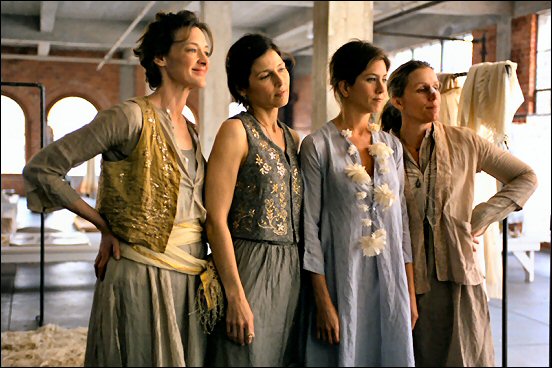
Nicole Holofcener obviously has some issues with depressed white rich American women- perhaps because she's one herself- because it seems to be all she can take it on herself to write about. I don't think it's possible to deny that Friends with Money is rather biased towards it's female characters- the men here are, in order of the negativity that the film gives them, angry, disgusting, effeminate and frivolous. I suppose it's redundant to say this, though, since, rather unusually for a Hollywood film, Friends with Money is both and directed by a woman, and the number of female auteurs in the world is distressingly little. But something about Friends with Money is a bit nasty, a bit self-centred- oh, please, moan yet again about your upper-crust depression! The main thing I find wrong with this film is that it seems to equate money to happiness- you could make a ranking scale of wealthiness of the four friends here, and then make a graph comparing it to happiness, and the results would be conclusive: dollars=contentment. Joan Cusack is the one with the big bucks here, and I suppose it says something about Holofcener's preoccupation with showing us these women's problems that she hardly has a storyline. Meanwhile, the film is virtually obsessed with Jennifer Aniston, who, surprise surprise, is the poor one of the group.

Friends with Money clearly thinks it's most valuable asset is Miss Aniston- from it's coy, built-up introduction of the actress amongst the standard introductory montage of all four lead characters (by contrast, the first thing we see of Cusack, Frances McDormand and Holofcener-stalwart Catherine Keener are their faces) to dressing her up in a French maid's outfit, Holofcener seems to want to flaunt it's most bankable star in every way it can, and it is perhaps a shame that Aniston never really repays the adoration poured upon her by her director. Barely a smile passes by Aniston's lips here, no chances to display the comic wit she has previously displayed, and she is even lacking the rather galling expression she introduced to good effect in 2002's The Good Girl.

If we were to go up the chain of wealthiness (and we shall), we would next find the worn display of Catherine Keener, who works as a screenwriter with her husband (Jason Isaacs) and is selfishly having a second story put on her spacious bungalow, not realising she is blocking the neighbour's view. Forgive me, Cathy, but when did a view become so important? Perhaps Holofcener's greatest crime here is giving Keener, who has starred in all of her films (she headlined the last one, the astute if uneven Lovely & Amazing), such a disparate part. In fact, Holofcener does this to pretty much every actor, unsurprising when you note that the film clocks in at a paltry 85 minutes, never fleshing out the various plots she introduces, and never giving much closure- so, is McDormand's husband (Simon McBurney) actually gay? Why is McDormand so angry? And what, exactly, was the purpose of Cusack and her husband (Greg Germann)?

I had much the same problem with Friends with Money that I did with Lovely & Amazing- each seemed to end permaturely, cutting everything off quite suddenly and leaving both characters and audience hanging in mid-air. However, while Lovely & Amazing, with it's more confined plot strands and fewer characters, made this sudden end quite effective- it was an effective snapshot of a family's unsatisfied lives- Friends with Money never even answers it's most basic questions, most notably this: how did Olivia (Aniston) ever become friends with these other women, all richer and older than she? Olivia seems so at odds with her friends, so different in status and goals, that it never really becomes apparent why they have her as a friend.

But thankfully, Friends with Money isn't completely worthless. There's some good stuff here, particularly in performance: from the understated performance of an underused Joan Cusack, some solid supporting work from Jason Isaacs and Simon McBurney, and, in particular, the sympathetic rage and tiredness of Frances McDormand. McDormand's character Jane is, for no apparent reason, a bitter and angry woman, yelling at people who park in 'her' space and who cut in front of her at an Old Navy counter. All this pointless behaviour could easily have made Jane highly dislikable, and indeed, there's little in the script to combat this- but McDormand's vulnerability and exasperation make Jane's angry comprehensible, even relatable. Oh, and I don't mean to be too critical of Holofcener- there are some good observations here, including Keener's shock at being shown what her extension is doing, and the awkward relationship between Olivia and the boorish Mike (Scott Caan), who 'helps' her with her cleaning jobs and then demands a cut of the pay, and avoids looking at her during sex.

But, ultimately, Friends with Money can't help seeming a tad redundant- we've seen most of this stuff before, even from Holofcener herself, and, despite the quality cast that's been gathered and the solid production work on display- costume is particularly adept, with the richest women dressing themselves down while dressing Aniston up- it all feels rather empty and light-headed. These friends may have money, and that might make them happier, but I doubt it'll have the same effect on their audience. Grade: C+

Friday, January 19, 2007

Oscar Predictions

*= actual nominees

Best Picture:

- * Babel
- * The Departed
- Dreamgirls
- * Little Miss Sunshine
- * The Queen

Alternate: * Letters from Iwo Jima

This seems to be the line-up that most people are predicting- perhaps Little Miss Sunshine and Babel weren't too secure before, but after their respective PGA and Globe wins, it'd be hard for anything else to wedge itself in. I'd say, actually, that if anything's going it'll be The Queen- doubtful, though. Too bad Children of Men never got any traction here. Not that anyone tried to help it.

Best Director:
- * Clint Eastwood, Letters From Iwo Jima
- * Stephen Frears, The Queen
- * Paul Greengrass, United 93
- * Alejandro Gonzalez Innaritu, Babel
- * Martin Scorsese, The Departed

Alternate: Alfonso Cuaron, Children of Men

Am I being too hasty dismissing Bill Condon (Dreamgirls)? Perhaps. But for some reason I don't think he'll get in- Dreamgirls isn't quite as popular as everyone expected (even with it's Globe win) and it's hardly the direction making everyone go ga-ga over it. Scorsese and Innaritu are the only locks, if you ask me- Frears is a strange sleeper who no one's raving over but appears without fail. Greengrass and Eastwood are the most obvious "auteurs" to slip in here- can both make it?

Best Actor:
- Leonardo DiCaprio, The Departed
- * Ryan Gosling, Half Nelson
- * Peter O'Toole, Venus
- * Will Smith, The Pursuit of Happyness
- * Forest Whitaker, The Last King of Scotland

Alternate: Sacha Baron Cohen, Borat

Missed: * DiCaprio in Blood Diamond

O'Toole, Whitaker and Smith (why? I mean I haven't seen it but I just don't GET him) are locks, DiCaprio might get in for the wrong film (Blood Diamond) or (please god no) get shafted in a vote split. And Gosling... well, there isn't really anyone bar Cohen who could get in here, and that just seems off. And, shockingly, Gosling is actually deserving!

Best Actress:
- * Penelope Cruz, Volver
- * Judi Dench, Notes on a Scandal
- * Helen Mirren, The Queen
- * Meryl Streep, The Devil Wears Prada
- * Kate Winslet, Little Children

Alternate: Maggie Gyllenhaal, Sherrybaby

Yawn. This is like, the most obvious line-up ever. None of them are bad performances (though I've yet to see Dench)- in fact, they're all very good, especially Cruz, but please, I need variety! I feed on it!

Best Actor In A Supporting Role:
- * Alan Arkin, Little Miss Sunshine
- * Jackie Earle Haley, Little Children
- * Djimon Hounsou, Blood Diamond
- * Eddie Murphy, Dreamgirls
- Jack Nicholson, The Departed

Alternate: * Mark Wahlberg, The Departed

The most wide-open acting category- anyone could really get in here, although Murphy is pretty much locked up. Otherwise, there's major doubts. Is Nicholson really a sure bet (he sure doesn't deserve it)? Will they get over Haley's creepy character? Did Arkin have enough to do? Is Hounsou really going to get nominated again? Or will they go for Wahlberg (smart and memorable), or Affleck, or Pitt? Who knows. I do my best.

Best Actress In A Supporting Role:
- * Adriana Barraza, Babel
- * Cate Blanchett, Notes on a Scandal
- * Abigail Breslin, Little Miss Sunshine
- * Jennifer Hudson, Dreamgirls
- * Rinko Kikuchi, Babel

Alternate: Emily Blunt, The Devil Wears Prada

Hudson is definite. Blanchett is pretty much too. At least one of the Babel ladies will make it, though most likely both. Cutie Breslin is most vulnerable- can Blunt snatch it? I wouldn't mind either way.

Best Adapted Screenplay:
- * Sacha Baron Cohen, Peter Baynham, Anthony Hines and Dan Mazer, Borat
- * Todd Field and Tom Perrotta, Little Children
- * Patrick Marber, Notes on a Scandal
- Aline Brosh McKenna, The Devil Wears Prada
- * William Monahan, The Departed

Alternate: Jason Reitman, Thank You For Smoking

Missed: * Children of Men

God knows why Little Children is in here, but it is. The Devil Wears Prada strikes me as a bit unbalanced even with all it's sassiness, yet it seems a sure thing- as does The Departed. Borat barely seems to have a screenplay (surely it's improvised mostly?), but I'd be a fool to let my dislike of it guide me. As for Notes... well, it's more "of-the-moment" than Thank You For Smoking, which doesn't really seem to have that many fans. But who knows.

Best Original Screenplay:
- Pedro Almodovar, Volver
- * Michael Arndt, Little Miss Sunshine
- * Guillermo Arriaga, Babel
- Paul Greengrass, United 93
- * Peter Morgan, The Queen

Alternate: Zach Helm, Stranger than Fiction

Missed: * Guillermo del Toro, Pan's Labyrinth; and * Iris Yamashita, Letters From Iwo Jima

No one seems to love Stranger than Fiction as much the actors apparently did, but it's still a possibility. The Queen, Babel and especially Little Miss Sunshine are surely locks, and I'm hedging my bets on the harrowing United 93 and the warm if wobbly Volver.

Best Animated Film
- * Cars
- * Happy Feet
- * Monster House

Alternate: A Scanner Darkly

Cars' Globe win and it's Pixar tag pretty much lock it up for a nod, if not the win too. Happy Feet is a cutie-pie and pretty much locked too, and I'd surprised if the offbeat and un-child-suitable A Scanner Darkly can beat the buoyant Monster House. I've seen Flushed Away in places but hardly anyone seemed to notice it's existance (and rightfully so).

Best Documentary:
- * An Inconvenient Truth
- * Iraq in Fragments
- * Jesus Camp
- Jonestown: The Life and Death of People's Temple
- The War Tapes

Alternate: * My Country, My Country

Missed: Deliver Us From Evil

An Inconvenient Truth is obvious; Iraq in Fragments and Jesus Camp are supposedly excellent and I've actually heard of them. The other two (including the apparently controversial Jonestown (see comments on this entry)) are complete guesses. As is my alternate. Hey, they never show anyone these things!

Best Foreign Language Film:
- Black Book (Netherlands)
- * The Lives of Others (Germany)
- * Pan's Labyrinth (Mexico)
- Volver (Spain)
- * Water (Canada)

Alternate: * Days of Glory (Algeria)

Missed: * After the Wedding (Denmark)

Volver and Pan's Labyrinth are this categories behemoths, while The Lives of Others has been slyly popping up next to them every time. As for the other two... well, Black Book is from a notorious director returning to home soil and Water seems quite popular. I'm not sure why the lavish Curse of the Golden Flower was knocked out at the previous stage but there you go.

Achievement in Cinematography:
- * Emmanuel Lubezki, Children of Men
- * Guillermo Navarro, Pan's Labyrinth
- Rodrigo Prieto, Babel
- Robert Richardson, The Good Shepherd
- * Vilmos Zsigmond, The Black Dahlia

Alternate: * Dick Pope, The Illusionist

Missed: Wally Pfister, The Prestige

Achievement in Art Direction:
- KK Barrett and Veronique Melery, Marie Antoinette
- * Eugenio Caballero, Pan's Labyrinth
- Jim Clay and Geoffrey Kirkland, Children of Men
- * John Myhre, Dreamgirls
- * Jeannine Opplewall, The Good Shepherd

Alternate: Henry Bumstead and Gary Fettis, Letters From Iwo Jima

Missed: * Pirates of the Caribbean: Dead Man's Chest and * The Prestige

Achievement In Film Editing:
- * Douglas Crise and Stephen Mirrione, Babel
- * Claire Douglas, Richard Pearson and Christopher Rouse, United 93
- * Alex Roderiguez, Children of Men
- * Thelma Schoonmaker, The Departed
- Lucia Zucchetti, The Queen

Alternate: Virginia Katz, Dreamgirls

Missed: * Richard Chew, Steven Rosenblum: Blood Diamond

Achievement in Costume Design:
- * Milena Canonero, Marie Antoinette
- * Sharen Davis, Dreamgirls
- Ruth Myers, The Painted Veil
- Julie Weiss, Bobby
- * Chung Man Yee, Curse of the Golden Flower

Alternate: * Patricia Field, The Devil Wears Prada

Missed: Consolata Boyle, The Queen

Best Original Score:
- Alexandre Desplat, The Painted Veil
- Philip Glass, The Illusionist
- Clint Mansell, The Fountain
- * Thomas Newman, The Good German
- * Gustavo Santaolla, Babel

Alternate: James Horner, Apocalypto

Missed: * Philip Glass, Notes on a Scandal; * Alexandre Desplat, The Queen and * Javier Narrete, Pan's Labyrinth

Best Original Song:
- Bryan Adams, Eliot Kennedy, Andrea Remanda, "Never Gonna Break My Faith", Bobby (performed by Aretha Franklin and Mary J. Blige)
- * Henry Kreiger, "Listen", Dreamgirls (performed by Beyonce)
- * Henry Kreiger, "Patience", Dreamgirls (performed by Eddie Murphy, Anika Noni Rose, and Keith Robinson)
- * Melissa Etheridge, "I Need to Wake Up", An Inconvenient Truth
- Prince, "Song of the Heart", Happy Feet

Alternate: Dave Stewart, Glen Ballard, "Ordinary Miracle", Charlotte's Web (performed by Sarah McLachlan)

Missed: * 'Love You I Do', Dreamgirls; * 'Our Town', Cars

Achievement In Visual Effects:
- * Pirates of the Caribbean: Dead Man's Chest
- * Poseidon
- * Superman Returns

Alternate: X-Men: The Last Stand

Best Make-Up:
- * Apocalypto
- * Pan's Labyrinth
- Pirates of the Caribbean: Dead Man's Chest

Alternate: The Prestige

Missed: Click (????!!!)

Best Sound:
- * Blood Diamond
- Casino Royale
- * Dreamgirls
- * Flags of Our Fathers
- * Pirates of the Caribbean: Dead Man's Chest

Alternate: * Apocalypto

Best Sound Editing:
- Cars
- * Pirates of the Caribbean: Dead Man's Chest
- Superman Returns

Alternate: *Flags of Our Fathers

Missed: * Apocalypto, * Blood Diamond, * Letters from Iwo Jima
(I only predicted three, for some reason.)

Overall: 71/99 (71%)
Big Eight: 34/40 (85%)

Thursday, January 18, 2007

Looking Ahead: My Ten Most Anticipated of 2007

A new year, new promises. 2006 wasn't the greatest year ever for film, so here's hoping that 2007 proves there's life in it yet. Here are my picks for the most promising flicks of 2007. (Dang, that would've rhymed last year.)

Runner-ups: After the Wedding, Chapter 27, Cowboys for Christ, The Invasion, Jindabyne, Love in the Time of Cholera, The Other Boleyn Girl, Paris je t'aime, Reservation Road

10. The Real Life of Angel Deverell
dir. Francois Ozon, cast: Romola Garai, Lucy Russell, Charlotte Rampling, Sam Neill, Michael Fassbender
I admit, my experience with Ozon is highly limited (I've only seen 2006's Time to Leave), but the new presence of Romola Garai as his self-proclaimed 'muse' is very intriguing and exciting. A rather untapped talent, Garai strikes me as, and Ozon seems to be just the right kind of director to draw on it. Based on the novel 'Angel' by British writer Elizabeth Taylor, the film will tell the story of Angelica Deverell, who as a teenager who retreats into romantic fantasies and becomes a writer. I think Ozon is very capable of striking the precise balance between aesthetic pleasure and the underlying drama the story hints at.

9. Atonement
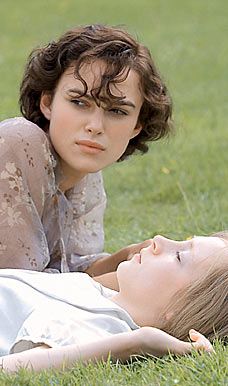
dir. Joe Wright, cast: James McAvoy, Keira Knightley, Romola Garai, Saoirse Ronan, Brenda Blethyn, Vanessa Redgrave
Alright, so I've never read any Ian McEwan, respected as he is, but this adaptation of his acclaimed novel is essentially appealing because of the cast, ranging from hot young things McAvoy, Knightley and Garai to respected thespians Redgrave and Blethyn. Young Briony (played, in ascending order, by Ronan, Garai and Redgrave) misconstrues the flirtation between her sister Knightley and McAvoy, leading to a terrible crime that haunts the characters through WWII. Exactly what McEwan's plot has in store for these characters I don't know, but quite frankly I don't want to: the surprise will be the nub, I think, and what a promising follow-up to Pride and Prejudice for both Wright and Knightley.

8. Evening
dir. Lajos Koltai, cast: Eileen Atkins, Glenn Close, Toni Collette, Hugh Dancy, Claire Danes, Vanessa Redgrave, Natasha Richardson, Meryl Streep, Patrick Wilson
Adapted from her own novel by Susan Minot alongside Michael Cunningham (The Hours), Evening looks like an extremely juicy film for its actresses, who are, evidently, mutltitudinous. A dying mother (Redgrave) reflects on her youth (Danes) while her daughters (Richardson and Collette) comes to terms with the impending loss of their mother and their own problems. Former cinematographer (on films including Being Julia, Sunshine and Malena) Koltai is only on his second feature as director here, but he seems a promising talent and the quality involved in both writing and cast is dazzling.

7. Margot at the Wedding
dir. Noah Baumbach, cast: Nicole Kidman, Jennifer Jason Leigh, Flora Cross, Jack Black, John Turturro, Ciaran Hinds
I hope the promise Baumbach displayed in his directorial debut The Squid and the Whale is followed up here. He certainly has the cast to work wonders with: Kidman continues to choose off-beat, quality projects, and I always love to see Jason Leigh on-screen. The weekend-set, familial storyline sounds ripe for Baumbach's unique brand of sardonic comedy, and, even if the title isn't exactly enticing, the rest of the movie certainly is.

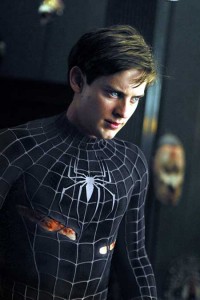
6. Spider-Man 3
dir. Sam Raimi, cast: Tobey Maguire, Kirsten Dunst, James Franco, Thomas Haden Church, Bryce Dallas Howard, Topher Grace, Theresa Russell
I fear this movie. Oh, no, I don't think it's going to be bad or anything, at least if the previous effort is anything to go by- an exciting, emotional blockbuster, bouncing with liveliness and ideas- but I fear what it will do to me. It looks like my beloved Mary-Jane Watson might be on her way out- if Bryce Dallas Howard as blonde vixen Gwen Stacy is anything to go by. And three villains- my, Mr. Raimi, if you think you can do it, go for it, but please, have some concern for my adrenaline. But perhaps what's most intruiging about this bookend of the trilogy- purportedly the last, at least with the main people on board- is the exceedingly dark dimensions to it: Spidey's struggle with his dark side, Harry's final step into evil, and a dissection of love. Should be thrilling.

5. My Blueberry Nights
dir. Wong Kar-Wai, cast: Norah Jones, Jude Law, David Strathairn, Tim Roth, Natalie Portman, Rachel Weisz
I've never really get on that well with Wong Kar-Wai's movies, but for some reason I always find myself looking forward to them. Maybe it's because they're always so ravishingly beautiful? Or because their casts are always so superb? Well, anyway, My Blueberry Nights, Kar-Wai's first American feature, is certainly set to be both of those: alright, so Norah Jones is an untried talent, but the various characters she meets on her "soul-searching journey" across the US are enough to make you dizzy. And, while Kar-Wai seems to have parted ways with photographic maverick Christopher Doyle, his dp this time is Darius Khondji, whose work includes such quality as Se7en and Delicatessan. Exactly what Kar-Wai has in store for us remains to be seen, but it sounds, well, yummy.

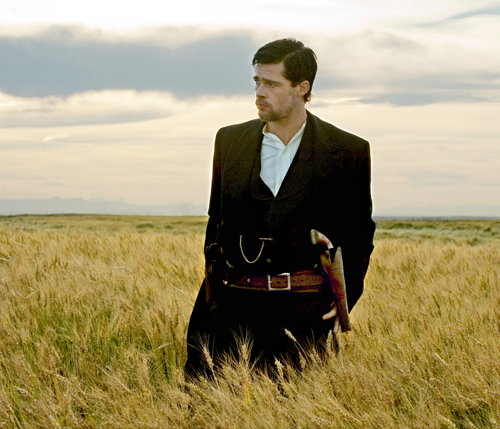
4. The Assassination of Jesse James by the Coward Robert Ford
dir. Andrew Dominik, cast: Brad Pitt, Casey Affleck, Mary-Louise Parker, Zooey Deschanel, Sam Rockwell, Sam Shepherd
Finally! Dominik follows up his unbalanced but vibrant first feature Chopper with this gorgeously titled Western, hopefully combining a superb cast with his unique visceral style and a tantalising script. With cinematographer Roger Deakins (favourite of the Coens), a score by Nick Cave (whose imaginations ran the ghostly The Proposition), and, apparently, a length and style reminiscent of Sergio Leone, this sounds so promising I've been waiting over a year for it. And I shall continue to do so.

3. La vie en rose (La Môme)
dir. Olivier Dahan, cast: Marion Cotillard, Sylvie Testud, Clotilde Courau, Jean-Paul Rouve, Pascal Greggory
The life of Edith Piaf. Yes, another biopic- but, not only is this one actually French (shock!), it's about a person who had a notoriously eventful and difficult life, and so it should be a fascinating and transfixing watch. Especially if the raves that a short extract from it that appeared on French television are anything to go by. Will it encounter the usual stumbling blocks that biopics do? Let's hope not.

2. The Bourne Ultimatum
dir. Paul Greengrass, cast: Matt Damon, Joan Allen, Paddy Considine, David Strathairn, Julia Stiles, Edgar Ramirez
Most of the Bourne team are back for the final entry in the trilogy, and things look promising that it'll be just as good- if not better- than the first two entries. Besting Bond at every corner, the Bourne series is a thrilling, riveting and dark spy series: never coming near to any ludicrous or camp impulses, the whole series has throbbing with a nervy, jumpy heart, and I see no reason why that would suddenly stop beating. And- thank god- Joan Allen returns, bringing her edginess and passion to Pamela Landy once again.

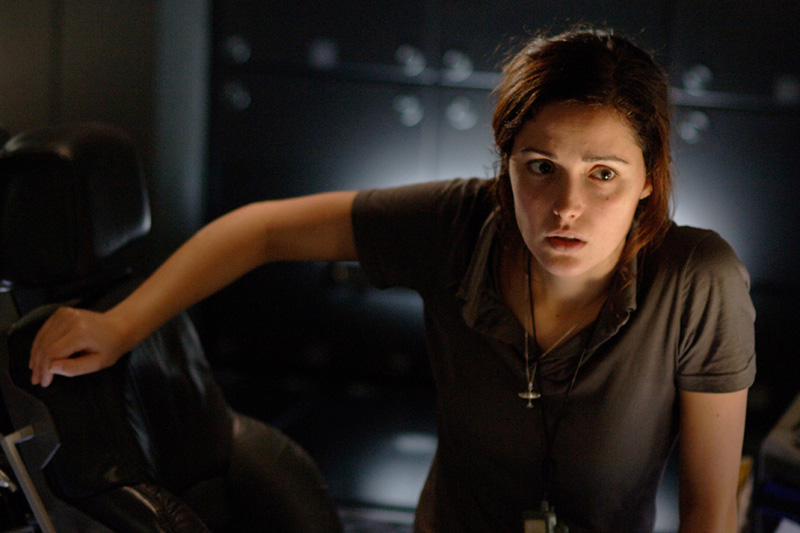
1. Sunshine
dir. Danny Boyle, cast: Rose Byrne, Cliff Curtis, Chris Evans, Troy Garity, Cillian Murphy, Hiroyuki Sanada, Mark Strong, Benedict Wong, Michelle Yeoh
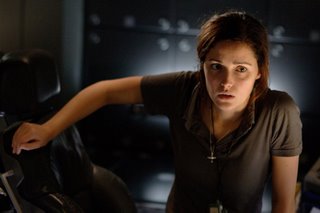
Okay. I can't say, unlike the rest of the world, that I've ever found Danny Boyle a particularly good director. In fact, I've never really liked any of his films except the charming Millions- Trainspotting was fine, 28 Days Later... was passable, but I downright despise A Life Less Ordinary and The Beach- and yet something immediatly draws me to Sunshine. Maybe it's that cast, which is one of the most outlandishly eclectic I think I've ever seen. (When did Rose Byrne suddenly become a star? That's one of the nicest surprises I've ever had.) Maybe it's the wacked out, pulse-heightening plot- a bunch of astronauts are sent to "revive" the dying sun and go mad as they get nearer. Maybe I just love Rose Byrne. Well, whichever, Sunshine has the possibility of being either laughably ludicrous, or wonderfully, frightening impactful- I sincerely hope it takes the latter route, and I don't have to wait long to find out.