Wednesday, January 31, 2007

Boredom & Irony

Zidane: A 21st Century Portrait is one of the most vacuous, pointless and, yes, pretentious, films I think I've ever come across. I admit, I'm not really a football fan, but even those in the audience who obviously were had been reduced to glazed, slumping forms by the time this finally drew itself to a close. That was, of course, if they hadn't left the theatre already. Zidane says it's going to follow the footballer closely for an entire match, but it can't even stick to its own rules- why all the jumps between the live match and pixellations of it on a tv screen? Why the half-time deliberations over what was happening in the world that same day? Why the hollow, pompous subtitles ostensibly telling us Zidane's thoughts? Come to think of it, why did you even do this in the first place? Zidane tells us nothing other than footballers sweat and spit a lot, and I think pretty much anyone could have told you that. Grade: F

I love- LOVE- the fact that when I bought my ticket to Blood Diamond- which does, if nothing else, make its intentions to open people's eyes to the corruption in parts of the diamond trade- they handed me a leaflet (see left) with which I could win an £8000 diamond. I do wonder, sometimes, if the people who run these cinemas actually know anything about the films they show beyond their titles. There's a scene in a film where someone's- I forget who- voiceover talks of the corruption in the trade as the picture shows an atypical man slipping an enormous diamond ring onto his fiancee's finger. I'd say the message here is pretty clear- get off this jewellery obsession, or at least ask before you leap. Thankfully that diamond there is, well, too big to actually be one of the blood diamond's of the film, but still. Oh, and the film itself is a bit bombastic, which rather dilutes its message, but it's rather more exciting than I expected (it is from the director of The Last ZZZamurai, after all) and I was quite gripped by it until it decided to turn Leonardo DiCaprio and Djimon Hounsou into some strange African odd couple and have them trek across the jungle, and then descend into cliched histrionics. But worthy of those sound noms it got, at least. Grade: C+

Friday, January 26, 2007

The Jazz Singer and The French Connection

[The Jazz Singer (Alan Crosland, 1927): Okay. Let's get one thing straight. I realize that this is, in the history of cinema, a very important film. People call it "the first sound film", or something along those lines, and, as a marker for the advent of the use of ears in the cinema, I suppose it has some lasting value. But... I'm sorry. It's just not good. At all. History has been extraordinarily kind to The Jazz Singer, and in more ways the one. The first thing you'll notice when you finally take it upon yourself to watch this 'landmark' is that, well, they barely talk at all. In fact, apart from one brief scene between Jack Robin (Al Jolson) and his mother (Eugenie Besserer), the only sound of display here is the scenes were Jolson (excruciatingly) sings. The rest of the movie relies of the silent cinema tradition of intertitles telling us shorthand what's being said. Is this really the first talkie if they barely talk? I'm not really qualified to make that judgment. However, I would say I'm qualified to say that, as a film, straight-up, The Jazz Singer is rather bad. Apart from the fact that Jolson- a very popular star in his day- is one of the most annoying people I've ever had to watch, The Jazz Singer repeatedly strikes some dull and often offensive notes. Yes, there's blackface going on here, for no apparent reason, as well as a horrific line in "He sounds like Jakie, but he looks like his shadow!"- which made my fellow classmates gasp. The maudlin story is very threadbare and uninvolving- an interior battle between career and faith- and ends very predictably and melodramatically. I suppose I have to give The Jazz Singer a reasonable grade just for what it signifies in the course of film history- but if I were you, I'd let it be. Grade: C]

[The French Connection (William Friedkin, 1971): Before seeing William Friedkin's superb Bug (currently pending release in 2007) I'd never actually seen anything by the Oscar-winning director, not even his infamous The Exorcist, so I jumped at the chance to watch 1971's 'Best Picture' The French Connection, though, to be frank, I wasn't expecting much from it. On it's limited plot, though, The French Connection manages to hang a lot of stuff: the grittiness here was, perhaps, a first for a mainstream action film, as was the anti-hero in Gene Hackman's volatile 'Popeye' Doyle. Much of the central section of the film consists of Hackman and his fellow police officers tracking various suspects around New York- this is done silently, stealthily and with skill, making a potentially deadening sequence quietly thrilling. Perhaps the film goes a bit off-track with it's poorly orchestrated shootout sequence, as well as a confusing final shot (in both senses of the word), but The French Connection makes a strong case for the awards it recieved and holds up surprisingly well. Oh, and there's that car chase too, of course, which immediatly makes the case for the Best Scene Ever. But you know all about that. Grade: B+]

Sunday, January 21, 2007

Friends with Money (Holofcener, 2006)

Time for a review...

Friends with Money (Nicole Holofcener, 2006)

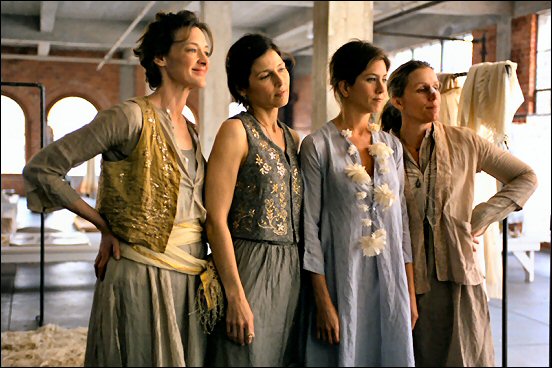
Nicole Holofcener obviously has some issues with depressed white rich American women- perhaps because she's one herself- because it seems to be all she can take it on herself to write about. I don't think it's possible to deny that Friends with Money is rather biased towards it's female characters- the men here are, in order of the negativity that the film gives them, angry, disgusting, effeminate and frivolous. I suppose it's redundant to say this, though, since, rather unusually for a Hollywood film, Friends with Money is both and directed by a woman, and the number of female auteurs in the world is distressingly little. But something about Friends with Money is a bit nasty, a bit self-centred- oh, please, moan yet again about your upper-crust depression! The main thing I find wrong with this film is that it seems to equate money to happiness- you could make a ranking scale of wealthiness of the four friends here, and then make a graph comparing it to happiness, and the results would be conclusive: dollars=contentment. Joan Cusack is the one with the big bucks here, and I suppose it says something about Holofcener's preoccupation with showing us these women's problems that she hardly has a storyline. Meanwhile, the film is virtually obsessed with Jennifer Aniston, who, surprise surprise, is the poor one of the group.

Friends with Money clearly thinks it's most valuable asset is Miss Aniston- from it's coy, built-up introduction of the actress amongst the standard introductory montage of all four lead characters (by contrast, the first thing we see of Cusack, Frances McDormand and Holofcener-stalwart Catherine Keener are their faces) to dressing her up in a French maid's outfit, Holofcener seems to want to flaunt it's most bankable star in every way it can, and it is perhaps a shame that Aniston never really repays the adoration poured upon her by her director. Barely a smile passes by Aniston's lips here, no chances to display the comic wit she has previously displayed, and she is even lacking the rather galling expression she introduced to good effect in 2002's The Good Girl.

If we were to go up the chain of wealthiness (and we shall), we would next find the worn display of Catherine Keener, who works as a screenwriter with her husband (Jason Isaacs) and is selfishly having a second story put on her spacious bungalow, not realising she is blocking the neighbour's view. Forgive me, Cathy, but when did a view become so important? Perhaps Holofcener's greatest crime here is giving Keener, who has starred in all of her films (she headlined the last one, the astute if uneven Lovely & Amazing), such a disparate part. In fact, Holofcener does this to pretty much every actor, unsurprising when you note that the film clocks in at a paltry 85 minutes, never fleshing out the various plots she introduces, and never giving much closure- so, is McDormand's husband (Simon McBurney) actually gay? Why is McDormand so angry? And what, exactly, was the purpose of Cusack and her husband (Greg Germann)?

I had much the same problem with Friends with Money that I did with Lovely & Amazing- each seemed to end permaturely, cutting everything off quite suddenly and leaving both characters and audience hanging in mid-air. However, while Lovely & Amazing, with it's more confined plot strands and fewer characters, made this sudden end quite effective- it was an effective snapshot of a family's unsatisfied lives- Friends with Money never even answers it's most basic questions, most notably this: how did Olivia (Aniston) ever become friends with these other women, all richer and older than she? Olivia seems so at odds with her friends, so different in status and goals, that it never really becomes apparent why they have her as a friend.

But thankfully, Friends with Money isn't completely worthless. There's some good stuff here, particularly in performance: from the understated performance of an underused Joan Cusack, some solid supporting work from Jason Isaacs and Simon McBurney, and, in particular, the sympathetic rage and tiredness of Frances McDormand. McDormand's character Jane is, for no apparent reason, a bitter and angry woman, yelling at people who park in 'her' space and who cut in front of her at an Old Navy counter. All this pointless behaviour could easily have made Jane highly dislikable, and indeed, there's little in the script to combat this- but McDormand's vulnerability and exasperation make Jane's angry comprehensible, even relatable. Oh, and I don't mean to be too critical of Holofcener- there are some good observations here, including Keener's shock at being shown what her extension is doing, and the awkward relationship between Olivia and the boorish Mike (Scott Caan), who 'helps' her with her cleaning jobs and then demands a cut of the pay, and avoids looking at her during sex.

But, ultimately, Friends with Money can't help seeming a tad redundant- we've seen most of this stuff before, even from Holofcener herself, and, despite the quality cast that's been gathered and the solid production work on display- costume is particularly adept, with the richest women dressing themselves down while dressing Aniston up- it all feels rather empty and light-headed. These friends may have money, and that might make them happier, but I doubt it'll have the same effect on their audience. Grade: C+

Friday, January 19, 2007

Oscar Predictions

*= actual nominees

Best Picture:

- * Babel
- * The Departed
- Dreamgirls
- * Little Miss Sunshine
- * The Queen

Alternate: * Letters from Iwo Jima

This seems to be the line-up that most people are predicting- perhaps Little Miss Sunshine and Babel weren't too secure before, but after their respective PGA and Globe wins, it'd be hard for anything else to wedge itself in. I'd say, actually, that if anything's going it'll be The Queen- doubtful, though. Too bad Children of Men never got any traction here. Not that anyone tried to help it.

Best Director:
- * Clint Eastwood, Letters From Iwo Jima
- * Stephen Frears, The Queen
- * Paul Greengrass, United 93
- * Alejandro Gonzalez Innaritu, Babel
- * Martin Scorsese, The Departed

Alternate: Alfonso Cuaron, Children of Men

Am I being too hasty dismissing Bill Condon (Dreamgirls)? Perhaps. But for some reason I don't think he'll get in- Dreamgirls isn't quite as popular as everyone expected (even with it's Globe win) and it's hardly the direction making everyone go ga-ga over it. Scorsese and Innaritu are the only locks, if you ask me- Frears is a strange sleeper who no one's raving over but appears without fail. Greengrass and Eastwood are the most obvious "auteurs" to slip in here- can both make it?

Best Actor:
- Leonardo DiCaprio, The Departed
- * Ryan Gosling, Half Nelson
- * Peter O'Toole, Venus
- * Will Smith, The Pursuit of Happyness
- * Forest Whitaker, The Last King of Scotland

Alternate: Sacha Baron Cohen, Borat

Missed: * DiCaprio in Blood Diamond

O'Toole, Whitaker and Smith (why? I mean I haven't seen it but I just don't GET him) are locks, DiCaprio might get in for the wrong film (Blood Diamond) or (please god no) get shafted in a vote split. And Gosling... well, there isn't really anyone bar Cohen who could get in here, and that just seems off. And, shockingly, Gosling is actually deserving!

Best Actress:
- * Penelope Cruz, Volver
- * Judi Dench, Notes on a Scandal
- * Helen Mirren, The Queen
- * Meryl Streep, The Devil Wears Prada
- * Kate Winslet, Little Children

Alternate: Maggie Gyllenhaal, Sherrybaby

Yawn. This is like, the most obvious line-up ever. None of them are bad performances (though I've yet to see Dench)- in fact, they're all very good, especially Cruz, but please, I need variety! I feed on it!

Best Actor In A Supporting Role:
- * Alan Arkin, Little Miss Sunshine
- * Jackie Earle Haley, Little Children
- * Djimon Hounsou, Blood Diamond
- * Eddie Murphy, Dreamgirls
- Jack Nicholson, The Departed

Alternate: * Mark Wahlberg, The Departed

The most wide-open acting category- anyone could really get in here, although Murphy is pretty much locked up. Otherwise, there's major doubts. Is Nicholson really a sure bet (he sure doesn't deserve it)? Will they get over Haley's creepy character? Did Arkin have enough to do? Is Hounsou really going to get nominated again? Or will they go for Wahlberg (smart and memorable), or Affleck, or Pitt? Who knows. I do my best.

Best Actress In A Supporting Role:
- * Adriana Barraza, Babel
- * Cate Blanchett, Notes on a Scandal
- * Abigail Breslin, Little Miss Sunshine
- * Jennifer Hudson, Dreamgirls
- * Rinko Kikuchi, Babel

Alternate: Emily Blunt, The Devil Wears Prada

Hudson is definite. Blanchett is pretty much too. At least one of the Babel ladies will make it, though most likely both. Cutie Breslin is most vulnerable- can Blunt snatch it? I wouldn't mind either way.

Best Adapted Screenplay:
- * Sacha Baron Cohen, Peter Baynham, Anthony Hines and Dan Mazer, Borat
- * Todd Field and Tom Perrotta, Little Children
- * Patrick Marber, Notes on a Scandal
- Aline Brosh McKenna, The Devil Wears Prada
- * William Monahan, The Departed

Alternate: Jason Reitman, Thank You For Smoking

Missed: * Children of Men

God knows why Little Children is in here, but it is. The Devil Wears Prada strikes me as a bit unbalanced even with all it's sassiness, yet it seems a sure thing- as does The Departed. Borat barely seems to have a screenplay (surely it's improvised mostly?), but I'd be a fool to let my dislike of it guide me. As for Notes... well, it's more "of-the-moment" than Thank You For Smoking, which doesn't really seem to have that many fans. But who knows.

Best Original Screenplay:
- Pedro Almodovar, Volver
- * Michael Arndt, Little Miss Sunshine
- * Guillermo Arriaga, Babel
- Paul Greengrass, United 93
- * Peter Morgan, The Queen

Alternate: Zach Helm, Stranger than Fiction

Missed: * Guillermo del Toro, Pan's Labyrinth; and * Iris Yamashita, Letters From Iwo Jima

No one seems to love Stranger than Fiction as much the actors apparently did, but it's still a possibility. The Queen, Babel and especially Little Miss Sunshine are surely locks, and I'm hedging my bets on the harrowing United 93 and the warm if wobbly Volver.

Best Animated Film
- * Cars
- * Happy Feet
- * Monster House

Alternate: A Scanner Darkly

Cars' Globe win and it's Pixar tag pretty much lock it up for a nod, if not the win too. Happy Feet is a cutie-pie and pretty much locked too, and I'd surprised if the offbeat and un-child-suitable A Scanner Darkly can beat the buoyant Monster House. I've seen Flushed Away in places but hardly anyone seemed to notice it's existance (and rightfully so).

Best Documentary:
- * An Inconvenient Truth
- * Iraq in Fragments
- * Jesus Camp
- Jonestown: The Life and Death of People's Temple
- The War Tapes

Alternate: * My Country, My Country

Missed: Deliver Us From Evil

An Inconvenient Truth is obvious; Iraq in Fragments and Jesus Camp are supposedly excellent and I've actually heard of them. The other two (including the apparently controversial Jonestown (see comments on this entry)) are complete guesses. As is my alternate. Hey, they never show anyone these things!

Best Foreign Language Film:
- Black Book (Netherlands)
- * The Lives of Others (Germany)
- * Pan's Labyrinth (Mexico)
- Volver (Spain)
- * Water (Canada)

Alternate: * Days of Glory (Algeria)

Missed: * After the Wedding (Denmark)

Volver and Pan's Labyrinth are this categories behemoths, while The Lives of Others has been slyly popping up next to them every time. As for the other two... well, Black Book is from a notorious director returning to home soil and Water seems quite popular. I'm not sure why the lavish Curse of the Golden Flower was knocked out at the previous stage but there you go.

Achievement in Cinematography:
- * Emmanuel Lubezki, Children of Men
- * Guillermo Navarro, Pan's Labyrinth
- Rodrigo Prieto, Babel
- Robert Richardson, The Good Shepherd
- * Vilmos Zsigmond, The Black Dahlia

Alternate: * Dick Pope, The Illusionist

Missed: Wally Pfister, The Prestige

Achievement in Art Direction:
- KK Barrett and Veronique Melery, Marie Antoinette
- * Eugenio Caballero, Pan's Labyrinth
- Jim Clay and Geoffrey Kirkland, Children of Men
- * John Myhre, Dreamgirls
- * Jeannine Opplewall, The Good Shepherd

Alternate: Henry Bumstead and Gary Fettis, Letters From Iwo Jima

Missed: * Pirates of the Caribbean: Dead Man's Chest and * The Prestige

Achievement In Film Editing:
- * Douglas Crise and Stephen Mirrione, Babel
- * Claire Douglas, Richard Pearson and Christopher Rouse, United 93
- * Alex Roderiguez, Children of Men
- * Thelma Schoonmaker, The Departed
- Lucia Zucchetti, The Queen

Alternate: Virginia Katz, Dreamgirls

Missed: * Richard Chew, Steven Rosenblum: Blood Diamond

Achievement in Costume Design:
- * Milena Canonero, Marie Antoinette
- * Sharen Davis, Dreamgirls
- Ruth Myers, The Painted Veil
- Julie Weiss, Bobby
- * Chung Man Yee, Curse of the Golden Flower

Alternate: * Patricia Field, The Devil Wears Prada

Missed: Consolata Boyle, The Queen

Best Original Score:
- Alexandre Desplat, The Painted Veil
- Philip Glass, The Illusionist
- Clint Mansell, The Fountain
- * Thomas Newman, The Good German
- * Gustavo Santaolla, Babel

Alternate: James Horner, Apocalypto

Missed: * Philip Glass, Notes on a Scandal; * Alexandre Desplat, The Queen and * Javier Narrete, Pan's Labyrinth

Best Original Song:
- Bryan Adams, Eliot Kennedy, Andrea Remanda, "Never Gonna Break My Faith", Bobby (performed by Aretha Franklin and Mary J. Blige)
- * Henry Kreiger, "Listen", Dreamgirls (performed by Beyonce)
- * Henry Kreiger, "Patience", Dreamgirls (performed by Eddie Murphy, Anika Noni Rose, and Keith Robinson)
- * Melissa Etheridge, "I Need to Wake Up", An Inconvenient Truth
- Prince, "Song of the Heart", Happy Feet

Alternate: Dave Stewart, Glen Ballard, "Ordinary Miracle", Charlotte's Web (performed by Sarah McLachlan)

Missed: * 'Love You I Do', Dreamgirls; * 'Our Town', Cars

Achievement In Visual Effects:
- * Pirates of the Caribbean: Dead Man's Chest
- * Poseidon
- * Superman Returns

Alternate: X-Men: The Last Stand

Best Make-Up:
- * Apocalypto
- * Pan's Labyrinth
- Pirates of the Caribbean: Dead Man's Chest

Alternate: The Prestige

Missed: Click (????!!!)

Best Sound:
- * Blood Diamond
- Casino Royale
- * Dreamgirls
- * Flags of Our Fathers
- * Pirates of the Caribbean: Dead Man's Chest

Alternate: * Apocalypto

Best Sound Editing:
- Cars
- * Pirates of the Caribbean: Dead Man's Chest
- Superman Returns

Alternate: *Flags of Our Fathers

Missed: * Apocalypto, * Blood Diamond, * Letters from Iwo Jima
(I only predicted three, for some reason.)

Overall: 71/99 (71%)
Big Eight: 34/40 (85%)

Thursday, January 18, 2007

Looking Ahead: My Ten Most Anticipated of 2007

A new year, new promises. 2006 wasn't the greatest year ever for film, so here's hoping that 2007 proves there's life in it yet. Here are my picks for the most promising flicks of 2007. (Dang, that would've rhymed last year.)

Runner-ups: After the Wedding, Chapter 27, Cowboys for Christ, The Invasion, Jindabyne, Love in the Time of Cholera, The Other Boleyn Girl, Paris je t'aime, Reservation Road

10. The Real Life of Angel Deverell
dir. Francois Ozon, cast: Romola Garai, Lucy Russell, Charlotte Rampling, Sam Neill, Michael Fassbender
I admit, my experience with Ozon is highly limited (I've only seen 2006's Time to Leave), but the new presence of Romola Garai as his self-proclaimed 'muse' is very intriguing and exciting. A rather untapped talent, Garai strikes me as, and Ozon seems to be just the right kind of director to draw on it. Based on the novel 'Angel' by British writer Elizabeth Taylor, the film will tell the story of Angelica Deverell, who as a teenager who retreats into romantic fantasies and becomes a writer. I think Ozon is very capable of striking the precise balance between aesthetic pleasure and the underlying drama the story hints at.

9. Atonement
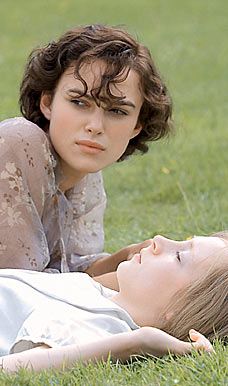
dir. Joe Wright, cast: James McAvoy, Keira Knightley, Romola Garai, Saoirse Ronan, Brenda Blethyn, Vanessa Redgrave
Alright, so I've never read any Ian McEwan, respected as he is, but this adaptation of his acclaimed novel is essentially appealing because of the cast, ranging from hot young things McAvoy, Knightley and Garai to respected thespians Redgrave and Blethyn. Young Briony (played, in ascending order, by Ronan, Garai and Redgrave) misconstrues the flirtation between her sister Knightley and McAvoy, leading to a terrible crime that haunts the characters through WWII. Exactly what McEwan's plot has in store for these characters I don't know, but quite frankly I don't want to: the surprise will be the nub, I think, and what a promising follow-up to Pride and Prejudice for both Wright and Knightley.

8. Evening
dir. Lajos Koltai, cast: Eileen Atkins, Glenn Close, Toni Collette, Hugh Dancy, Claire Danes, Vanessa Redgrave, Natasha Richardson, Meryl Streep, Patrick Wilson
Adapted from her own novel by Susan Minot alongside Michael Cunningham (The Hours), Evening looks like an extremely juicy film for its actresses, who are, evidently, mutltitudinous. A dying mother (Redgrave) reflects on her youth (Danes) while her daughters (Richardson and Collette) comes to terms with the impending loss of their mother and their own problems. Former cinematographer (on films including Being Julia, Sunshine and Malena) Koltai is only on his second feature as director here, but he seems a promising talent and the quality involved in both writing and cast is dazzling.

7. Margot at the Wedding
dir. Noah Baumbach, cast: Nicole Kidman, Jennifer Jason Leigh, Flora Cross, Jack Black, John Turturro, Ciaran Hinds
I hope the promise Baumbach displayed in his directorial debut The Squid and the Whale is followed up here. He certainly has the cast to work wonders with: Kidman continues to choose off-beat, quality projects, and I always love to see Jason Leigh on-screen. The weekend-set, familial storyline sounds ripe for Baumbach's unique brand of sardonic comedy, and, even if the title isn't exactly enticing, the rest of the movie certainly is.

6. Spider-Man 3
dir. Sam Raimi, cast: Tobey Maguire, Kirsten Dunst, James Franco, Thomas Haden Church, Bryce Dallas Howard, Topher Grace, Theresa Russell
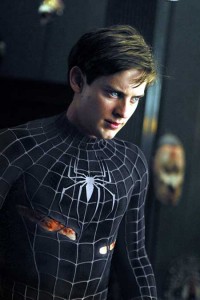
I fear this movie. Oh, no, I don't think it's going to be bad or anything, at least if the previous effort is anything to go by- an exciting, emotional blockbuster, bouncing with liveliness and ideas- but I fear what it will do to me. It looks like my beloved Mary-Jane Watson might be on her way out- if Bryce Dallas Howard as blonde vixen Gwen Stacy is anything to go by. And three villains- my, Mr. Raimi, if you think you can do it, go for it, but please, have some concern for my adrenaline. But perhaps what's most intruiging about this bookend of the trilogy- purportedly the last, at least with the main people on board- is the exceedingly dark dimensions to it: Spidey's struggle with his dark side, Harry's final step into evil, and a dissection of love. Should be thrilling.

5. My Blueberry Nights
dir. Wong Kar-Wai, cast: Norah Jones, Jude Law, David Strathairn, Tim Roth, Natalie Portman, Rachel Weisz
I've never really get on that well with Wong Kar-Wai's movies, but for some reason I always find myself looking forward to them. Maybe it's because they're always so ravishingly beautiful? Or because their casts are always so superb? Well, anyway, My Blueberry Nights, Kar-Wai's first American feature, is certainly set to be both of those: alright, so Norah Jones is an untried talent, but the various characters she meets on her "soul-searching journey" across the US are enough to make you dizzy. And, while Kar-Wai seems to have parted ways with photographic maverick Christopher Doyle, his dp this time is Darius Khondji, whose work includes such quality as Se7en and Delicatessan. Exactly what Kar-Wai has in store for us remains to be seen, but it sounds, well, yummy.

4. The Assassination of Jesse James by the Coward Robert Ford
dir. Andrew Dominik, cast: Brad Pitt, Casey Affleck, Mary-Louise Parker, Zooey Deschanel, Sam Rockwell, Sam Shepherd
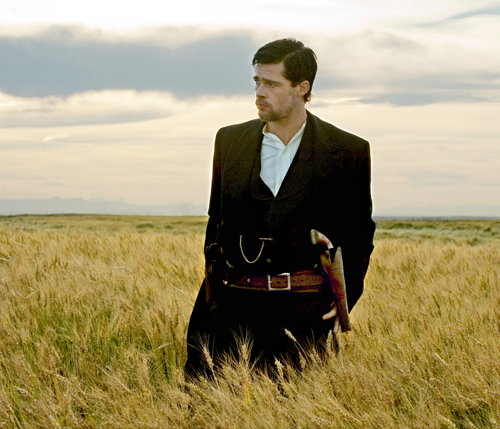
Finally! Dominik follows up his unbalanced but vibrant first feature Chopper with this gorgeously titled Western, hopefully combining a superb cast with his unique visceral style and a tantalising script. With cinematographer Roger Deakins (favourite of the Coens), a score by Nick Cave (whose imaginations ran the ghostly The Proposition), and, apparently, a length and style reminiscent of Sergio Leone, this sounds so promising I've been waiting over a year for it. And I shall continue to do so.

3. La vie en rose (La Môme)
dir. Olivier Dahan, cast: Marion Cotillard, Sylvie Testud, Clotilde Courau, Jean-Paul Rouve, Pascal Greggory
The life of Edith Piaf. Yes, another biopic- but, not only is this one actually French (shock!), it's about a person who had a notoriously eventful and difficult life, and so it should be a fascinating and transfixing watch. Especially if the raves that a short extract from it that appeared on French television are anything to go by. Will it encounter the usual stumbling blocks that biopics do? Let's hope not.

2. The Bourne Ultimatum
dir. Paul Greengrass, cast: Matt Damon, Joan Allen, Paddy Considine, David Strathairn, Julia Stiles, Edgar Ramirez
Most of the Bourne team are back for the final entry in the trilogy, and things look promising that it'll be just as good- if not better- than the first two entries. Besting Bond at every corner, the Bourne series is a thrilling, riveting and dark spy series: never coming near to any ludicrous or camp impulses, the whole series has throbbing with a nervy, jumpy heart, and I see no reason why that would suddenly stop beating. And- thank god- Joan Allen returns, bringing her edginess and passion to Pamela Landy once again.

1. Sunshine
dir. Danny Boyle, cast: Rose Byrne, Cliff Curtis, Chris Evans, Troy Garity, Cillian Murphy, Hiroyuki Sanada, Mark Strong, Benedict Wong, Michelle Yeoh
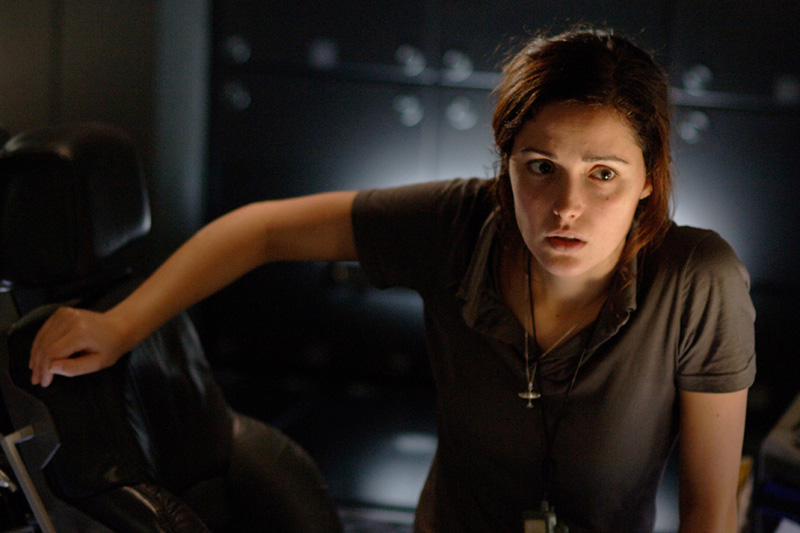
Okay. I can't say, unlike the rest of the world, that I've ever found Danny Boyle a particularly good director. In fact, I've never really liked any of his films except the charming Millions- Trainspotting was fine, 28 Days Later... was passable, but I downright despise A Life Less Ordinary and The Beach- and yet something immediatly draws me to Sunshine. Maybe it's that cast, which is one of the most outlandishly eclectic I think I've ever seen. (When did Rose Byrne suddenly become a star? That's one of the nicest surprises I've ever had.) Maybe it's the wacked out, pulse-heightening plot- a bunch of astronauts are sent to "revive" the dying sun and go mad as they get nearer. Maybe I just love Rose Byrne. Well, whichever, Sunshine has the possibility of being either laughably ludicrous, or wonderfully, frightening impactful- I sincerely hope it takes the latter route, and I don't have to wait long to find out.

Sunday, December 31, 2006

Miami Vice, The Break-Up, Just My Luck and Pirates of the Caribbean: Dead Man's Chest

[Miami Vice (Michael Mann, 2006): Okay, Michael- can I call you Mikey? No? Okay- I'll level with you. You wanna shove your grainy camera up against Jamie Foxx's forehead? Fine. You wanna try and make me believe that Colin Farrell and Gong Li are so stupid they'd do everything but do it on the dance floor when they're supposed to be keeping themselves secret? Fine. You wanna reserve your blood for the delightful offings of the particularly bad people, because everyone knows the worst people die most violently? Fine. Michael, if you wanna do all that, that's fine with me- just don't expect me to give a damn! You see, Michael, I watched your latest film Miami Vice the other night, and I... well, I don't like being mean, so let's just say it didn't sit well with me. It was kind of, well, boring. I know you were going for the cool, calm and collected thing, Mikey- sorry, Michael- but goddamn, there was no need to set your camera to 'freeze'. I didn't even know it had that setting. Oh, and you know, I thought you'd chosen your actors quite well- Colin Farrell is a charmer, usually, and Jamie Foxx, well, he's a flippin' Oscar winner; and wow, you've got Chinese superstar Gong Li, man, and that Naomie Harris, well, she's one for the future, you don't miss anything, Michael! But damn, Michael, you could have written the damn thing better. I mean, I spent half the movie trying to figure out what the hell was going on and the other half not giving a f**k. Yeah, those black humvees are wonderfully shiny, I kn- yes, I do quite like the sight of Gong Li's behind, Mich- yes, Michael, Paraguay is pretty! But Michael, I'm not just after eye-candy, man. I want something to chew on. I want something I can understand, something I can get excited about, something that gives me an intellectual buzz. You don't have that here, Michael. You can write an occasional cracking line of dialogue, sure. And you can set-up a gorgeous, fluid shot. But no, Michael, I didn't care if she woke up, and I didn't care if he was heartbroken. And, quite frankly, I don't care if you never work again, because I'm really rather bored of this cops-and-robbers shit. Especially when it's as boring as this. Grade: C-]

[The Break-Up (Peyton Reed, 2006): I wasn't really expecting too much from The Break-Up, as promisingly bubbly as its director, Reed, had proved from Down to Love (and cheerleader comedy Bring It On, which I've not seen), and as large a soft spot for Jennifer Aniston as I ashamedly admit to carrying over from Friends. The Break-Up has the rather novel premise of skipping the part that most romantic comedies chew on- the love bit- and instead chronicling a rather messy and bitter separation. Of course, separation would be easy enough if they lived separately- they'd never have to see each other- but that'd make a rather dull movie, so our broken coupling here, Gary (Vince Vaughn) and Brooke (Aniston), are wedged into a plot that has both valiantly hanging onto their jointly-bought and refurbished condo, laying claim to different areas and generally trying to piss the other one off. It's rather hard to forgive the unfunny stereotyping of Brooke's "gay" brother (John Michael Higgins) and her colleague (Justin Long), but thankfully the focus on them proves brief and The Break-Up provides a sizeable amount to chew on- as long as you don't take the film's promoters at their word. I doubt that, if The Break-Up had been marketed as anything other than a romantic comedy then it would have made next-to-no money, but ultimately, The Break-Up is anything but a comedy- this is a bitter, tart and astute drama, always tinged a little too liberally with Hollywood convention but also pleasingly realistic, especially in its open-ended final scene. I give Vaughn and Aniston major points for starring in something so respectively daring- sure, in the world of film as a whole, The Break-Up is hardly a revelation, but in the dollar-centric world of romantic Hollywood, choosing something that will undoubtably piss a large amount of their viewership off is quite commendable. Our two leads are, happily, quite good in their parts, Aniston particularly tearing herself apart in one raw dramatic confrontation- and if you want some comedy to sate your appetite, Jason Bateman (a favourite of mine from Arrested Development) is wonderfully sardonic in a small part as the couple's friend and realtor, while Judy Davis steals her scenes as Brooke's pale-faced, bitchy boss. The Break-Up is a film that gives you more than you expect, although, really, if you read the synopsis, it's hardly going to full of laughs. It's like a small-scale, less black and more raw version of that infamous break-up story The War of the Roses (surely the inspiration), and compared to that it's both easier to watch and harder to deal with. Grade: B-]

[Just My Luck (Donald Petrie, 2006): I suppose that, really, I should just dismiss Just My Luck out of hand- 'oh, it's just a throwaway teen romantic slapstick comedy, don't be so harsh'- but the whole thing bothered me so much that I couldn't. I will easily admit to loving Lindsay Lohan- she's a smart, warm screen presence with excellent comic timing and still proves highly promising, as her performance in the late Robert Altman's A Prairie Home Companion this year shows us- but even she couldn't salvage anything out of this, and perhaps the film's biggest crime is that it actually manages to make Lohan an annoying presence. Fie the film that does this. But I didn't just have a problem with Lohan, I had a problem with the film's entire universe. In what world is luck's existance as a force so assured, so easily manipulated, as such that our central coupling- played by Lohan and wet-blanket Chris Pine- learn how to manage its transferance between them? And in what world are McFly, no less, so talented that they deserve a film which is basically built around them? I suppose it's my own fault, really, for caving into my curiousity about how a film starring Lindsay Lohan could possibly be so worthless, but if there's anything Just My Luck did manage, its demonstrating that. Grade: F]

[Pirates of the Caribbean: Dead Man's Chest (Gore Verbinski, 2006): Pity the poor American dollar. So small, so thin, so harmless, and yet he is tossed around so thoughtlessly, abandoned in snowy streets, screwed up in pockets, handed over to cinema attendants in return for such a worthless slog as this. I'm sure you've heard, and many times, that this sequel to 2003's surprise smash-hit Pirates of the Caribbean: The Curse of the Black Pearl is only the third film to pass to $1 billion worldwide mark. I'm sure you've also heard that it's not really very good. Well, both of those things are true, and although I'm sure that many people would debate the second one- hell, it must have made all that money somehow- I really, really, can't. I enjoyed the first film, long and slow as it was, but the only need for a second one seems money, and, unfortunately, Dead Man's Chest is as hollow and dead as, well, the dead man's chest. I'm sure you've also heard that 2007 brings a third film, At World's End, and Dead Man's Chest is nothing but a piece of connective tissue, a long haul between two films that no-one really cares about- for these people, it's all about the destination, and, unfortunately, Dead Man's Chest is the journey. Pity poor Johnny Depp, for while his infamous Captain Jack Sparrow in Black Pearl was a delightful, unpredictable mad-cap confection, nothing in Dead Man's Chest challenges him- there are no surprises here, no lunatic, unweildly lines, and while Depp occasionally raises a chuckle- "an undead monkey!"- with his offbeat delivery, the spark has been quashed. This, of course, leaves the rest of the cast more open to scrunity, and it seems that Keira Knightley needs to get out fast, Orlando Bloom can't sell a joke to save his life, Jonathan Pryce needs to retire, and Jack Davenport should just sue for thankless employment. Maybe Dead Man's Chest wouldn't be such an insufferable slog if it wasn't so long, but, connective tissue or not, Verbinski somehow spins this confused tale out for two and half hours- when did it become okay to make films so needlessly long, I ask? Nothing in Dead Man's Chest ever merits even an hour, let alone two and a half of them, and I wonder why, exactly, such a joyless piece of work would have been successful had it not been preceded by what was, at the time, an original and surprising popcorn blockbuster. I doubt it, somehow. Grade: D+]

Saturday, December 30, 2006

Catching Up With The Duds: The Covenant, The Nativity Story and Driving Lessons

[The Covenant (Renny Harlin, 2006): It seems rather pointless to even bother reviewing a movie as minor, overlooked and derided as The Covenant, but, neverthless, I shall attempt it. For me, The Covenant was a gap-filler, a movie to see when I could find nothing else but didn't feel like going home yet. (Never mind that it actually turned out to be better, if only slightly, than the film that preceded it, the anaemic Nativity Story.) I had, indeed, read all the damning reviews and callings of awfulness, and it perhaps because of that that The Covenant didn't turn out to be quite as dreadful as I feared: make no mistake, this is dreadful, cliched filmmaking and a horrendous script, but it falls into the 'so-bad-it's-entertaining' category. Self-conscious, unintentionally hilarious lines like "Harry Potter can kiss my ass!" and "Dreamcacther is the shit!" make it clear that for some reason The Covenant wants to think itself amongst illustrious company, but with a cast full of fashion-catalogue actors whose chests do more acting than they do (you could do worse as far as teenage eye-candy is concerned) it was never going to come close. Nevertheless, the sheer awfulness of it all actually makes it quite entertaining, teasing its audience with strange, unexplained references that clearly want their own sequel (not gonna happen) and ending on such a damp squib of a note that you leave chortling. I suppose it says something about the lack of good comedy in the cinemas today that The Covenant is one of the funniest movies I've seen all year. Grade: D+]

[The Nativity Story (Catherine Hardwicke, 2006): You'd think, wouldn't you, that by employing such an offbeat director as Catherine Hardwicke, famous for her striking portraits of disaffected youths in both thirteen and Lords of Dogtown, that the people behind The Nativity Story would have been aiming for much of the same in her tackling of the infamous story of Jesus' birth. After all, it does seem rife for re-examination- the film does mention, however briefly, the stoning Mary might recieve being pregnant not by her husband, even as she claims that her womb is swollen with the child of God. But, inexplicably, Hardwicke seems happy to tell this well-worn story straight, without any sign of her usual edgy techniques or insights, and this makes The Nativity Story an incredible bore. Why bother telling this story when every school does it every year- with a much smaller budget, yes, but at least they put their hearts into it. For not only is The Nativity Story an anaemic drag of a film, it's also totally empty, lacking any passion for anything at all, let alone a God. The settings are well re-created, but never does the film escape the feeling that just off the edge of the camera the real world is lying, so transparent is the acting and the photography. Keisha Castle-Hughes, in only her second role since her stunning debut in Whale Rider, is a pretty face but nothing more as Mary, while Oscar Isaac as Joseph is stolid and dull. Worst in show, as she increasingly seems to be, is Shohreh Aghdashloo, playing Mary's cousin Elizabeth who is also miraculously pregnant- but Aghdashloo's grotesque facial contortions and overbearing mannerisms may make you want to kick her straight into hell.Hardwicke, or her script (by Mike Rich), are convinced of the tale's spirituality, employing visions of the angel Gabriel (Alexander Siddig) and a glowingly vast beam of light over the stable where Jesus is born. Never before have I believed so little in the tale of the nativity, and I'm an atheist. Grade: D]

[Driving Lessons (Jeremy Brock, 2006): The more I think about Driving Lessons the more I hate it, so I suppose it's a good thing that the entire thing is so slim that it doesn't come to mind too often. Harry Potter's Rupert Grint- the red-haired one- is a pale imitation of an actor in the role of Ben Marshall, a socially inept young adult with a domineering mother (a garish Laura Linney), who comes out of his shell when he goes to work for a fading grand dame actress Evie Walton (Julie Walters). Not only is Driving Lessons almost entirely predictable (though you'll never predict the height of the horrors in its finale), but it is a dreadful drive, filled with squealing overacting by Julie Walters, so maximised that Rupert Grint is barely noticeable at all. Never once does Driving Lessons approach anything like reality, from the dampness of Grint's father figure (a vicar, no less) to Linney's wildly played performance, complete with unrecognisable accent, and from Grint's loss of virginity to an older Scottish girl to Walters's failure at a rare public appearance due to Grint's disappearance. Whether Driving Lessons wants to be a reticent version of Harold and Maude (no, they don't have sex) or something entirely different, it's certainly not worth your time, or, indeed, anyone else's. Stay far, far away, and let's hope Grint gets himself a different instructor. Grade: D-]

Friday, December 29, 2006

Breaking and Entering, Casino Royale, Final Destination 3, and Miss Potter

[Breaking and Entering (Anthony Minghella, 2006): Anthony Minghella returns to his low-key roots after Hollywood success with The English Patient, The Talented Mr. Ripley and Cold Mountain, but disappointingly that doesn't mean that he's recovered his talent. Minghella's vision of London is an odd one, where, sure, thieves and prostitutes exist, but they're never really bad or damaged people, just misunderstood. Minghella simply cannot grasp the darker side of the story he's trying to tell, swerving away from brief dalliances with it- Juliette Binoche's brief, angry run-in with her brother-in-law, who's corrupting her son- and seems so enamoured with the perfect little communual nature he's developed by the end that he goes totally overboard with a trite and unbelievable courtroom scene, followed by an even worse scene where someone changes their mind so quickly you'd think her neck had been snapped. I suppose you might want to see this for the attractive, respected cast, and while Juliette Binoche is superb and Robin Wright Penn does her best, Jude Law- given a monstrous part, make no mistake- is a repugnant and horrible lead whom is clearly supposed to be sympathetic in his deliberations between his Swedish girlfriend of ten years who has an autistic daughter, and the Bosnian immigrant mother of the teenager who broke into his office. It's not that Binoche's immigrant is a bad person, drawing Law's architect away, but that we are asked to be sympathetic towards this man, who selfishly becomes exasperated with his girlfriend when she has done nothing wrong except care for her daughter. Breaking and Entering is an unexpectedly bitter film, a bit like Todd Field's Little Children in that way, although thankfully Minghella does allow us a few glimpses at human connection- the relationship between Binoche and her son (the promising Rafi Gavron) is briefly seen but the warmest one in a film full of frostiness and distrust. If Minghella didn't thrust such a trite and 'upbeat' ending on us I might be more persuaded to take Breaking and Entering as a warning parable- the title, which ostensibly refers to Gavron's thieving habits, also seems to refer to twofold to Law's character: his pursuit into Binoche's withdrawn, private world, but also the wider difficulty of his invasion into King's Cross, an idea criticized throughout. But Breaking and Entering, for all its protestations otherwise, doesn't take place in King's Cross- it takes place in Minghella's fantasy world, one where lawyers are easily tricked and affairs are forgiven at the drop of a hat. It is not somewhere I want to be. Grade: C-]

[Casino Royale (Martin Campbell, 2006): Casino Royale is too long, yes, but I honestly can't think of what part of it I'd cut out, so I suppose that maybe it's actually not. I'm sure you've heard, repeatedly, that this is a reinvention of the Bond series, a Bourne-ification, if you want, since Jason Bourne has surely become today's gold standard for spy films. Casino Royale doesn't quite reach the dizzy heights of either of the Bourne films, which are unmatched in their dark cocktail of amnesia, corruption and solitary existance, but I can't say that it doesn't come close. Bond has been stripped back to the essentials: gone are Q, Moneypenny, invisible cars and all those campy one-liners. Bond is serious, Bond is blond: Bond is Daniel Craig, who gives the infamous creation a harder-edge than perhaps ever before, but also a softer one- Bond's heart is hardened by his requisite two killings, then softened by Eva Green's gorgeous Vesper Lynd, sent to accompany him on a mission to combat the world's premier poker player, Le Chiffre (Mads Mikkelsen). You might think, and indeed some do, that the middle section of the film is the boring part, because it majorly consists of a poker game- and yet Martin Campbell and his actors, and his camera, do their very best to keep the cards are gripping as the chases scenes, and it works. Casino Royale is a moral maze, one where the villain isn't really the villain and where the Bond girl isn't really a Bond girl. Campbell balances Royale's complications on a knife edge, keeping his audience riveted for two and a half hours- a running time which pained when Bryan Singer employed it for the lacklustre Superman Returns this summer, but Casino Royale is a paced, exhilirating thrill-ride, constantly flipping itself over- both literally and figuratively- and shifting expectations. The film ends suddenly, obviously setting itself up for a sequel, but simultaneously, so much and so little has happened in Casino Royale, and you're left with the strange feeling of being both satisfied and hungry for more. Grade: B+]

[Final Destination 3 (James Wong, 2006): Final Destination 3 was actually released in theatres, though the DVD is so lovingly crafted you'd never believe it. The film, see, comes on DVD with a "Choose Their Fate" option- you, as you watch the film, will be prompted to make 'key' decisions on things, leading to different events in the following film. This sounds like an interesting idea, especially within such a repetative series like the Final Destination films, which have finally given up trying to be intelligent and simply focus on the thrills. I must say, I enjoyed the first two films, intrigued by their phylosophical intrigues, slim as they were, and felt the two films entwinement with each other was quite complex. But Final Destination 3, save a couple of brief and explanatory words, is its own seperate entity, and therefore cannot pretend to be complex, and so they have clearly decided instead to advertise their delight in death and let you, the viewer, have a hand in choosing it. The problem with this is not the moral message behind it (though I suppose that's questionable) but the shoddy way that the makers of the DVD do it. One day, perhaps, we will actually be able to change films to suit what we want, but we're clearly not there yet. And as a straightforward film- which is how I watched it first time- Final Destination 3 is exactly what you'd expect- empty, badly-acted, slow and silly, although still creditably inventive in all the different ways it thinks off to off people. But, really, I need something slightly intelligent behind my death movies, and there's not an iota of that to be seen here. Grade: C-]

[Miss Potter (Chris Noonan, 2006): Miss Potter has the kind of twinkly, romantic tone that can only come from a Hollywood-financed, British-made period film, and Babe director's biopic of beloved Peter Rabbit author Beatrix Potter provides just about everything you'd expect. Renee Zellweger contorts her permanently blushing face wildly as the titular character, giving the film a strange off-balanced feeling that co-stars Ewan McGregor and Emily Watson, as Beatrix's publisher and his sister, just about manage to off-set. For a person who grew up with the tales of Miss Potter around them there will be an undeniable feeling of warmth that spreads from the film's brief animation of her drawings, but this also raises the rather creepy idea that Beatrix is a little bit mad, something which is simply ignored throughout. Miss Potter, is, of course, constrained by the fact that it's based on a real person, but Beatrix's life doesn't exactly present a normal romantic plot- her true love dies and she moves to the countryside- and so it keeps the interest more than the standard film of this type. Miss Potter's biggest problem is the woman herself- Zellweger, who's become increasingly more lambasted with good reason, for her talent seems to have been squashed by an overbearing conviction in her own sweetness: she doesn't know Beatrix Potter at all, but she sure thinks she does. It's sad that McGregor and Watson have to play second-string to her but they do their best with underwritten roles, which are both cut distressingly short. Ultimately, Miss Potter provides an undeniable pleasantness, but there's really little within it- it's the kind of film that demands nothing, that you could take your grandmother to, and that you'll forget hours after seeing it. Grade: C+]

Thursday, December 28, 2006

Perfume: The Story of a Murderer (2006)


Perfume: The Story of a Murderer (Tom Tykwer, 2006)

Whatever I may go on to say in this review, I cannot say the one thing you might be expecting: that I'd recommend you didn't see Perfume: The Story of a Murderer. Perfume is a highly flawed film, yes, a disappointing one, a distressing one, but it's also a fascinating one, and I would insist that you form your own opinions. Granted, this is an idea that should really be active with any film, which in effect makes the writing of reviews redundant if their sole purpose is to advise people on what to see. But Perfume is not a generic film, it is not one that can be described passively in one word, and you have certainly not seen it all before.

You might have seen bits, however, and it's when Perfume suddenly runs into familiar story-telling territory that the disasters commence. The first hour and a half or so of the film is really quite gripping; never perfect but always dextrously playing with its audience, guiding them through a world that it both dark and campy at the same time, a world that always totters on the border it creates between the two opposites. Before any images have even appeared there is a voice, and this voice is immediately recognisable to any viewer, whether positive or negative, of Lars Von Trier's incisive Dogville, for that voice is John Hurt's. This is, unsurprisingly, a problem for Perfume, because Hurt's voice, while a perfect match for the skewered artificiality of Trier's work, doesn't fit a more straight-forward atmosphere, which is what Perfume is clearly aiming for. I'm not sure whether director Tom Tykwer realises this or not, but Hurt's voice, after the opening, is rarely heard again- all the better to slide into Perfume's grimy world.

Jean-Baptiste Grenouille (played for most of the film by Ben Whishaw) is born, repulsively, under a fishmonger's table, where his mother, having experienced several stillbirths, leaves the slimed baby to die under the table, meaning, of course, that she's executed when the baby suddenly starts crying under her table, lying as it is in a pile of fish remains. Immediatly the main theme, and raison-de-etre, even, of Perfume is established. Patrick Suskind's infamous novel was branded unfilmable by the reclusive author himself, and for twenty years he refused to sell the rights to his novel, despite the apparent interest of filmmakers including Stanley Kubrick, Tim Burton and Martin Scorsese. Suskind insisted that because his novel is concerned so fully with smell, it would not translate to film- and he had a valid point, because not yet has smell-o-vision been invented. Tykwer does just about the only thing he can and uses film's unique senses- vision and hearing- to create the most vivid impression he can on his audience, willing them to conjure the aromas themselves. He achieves this well in the first part of the film but as his story stumbles, so does he, repeating motifs uselessly and letting the plot run away with the camera.

Perfume is fine while it takes the audience into places they haven't really been before- a newborn baby on a heap of stinking fish, the untrained youngster recreating a difficult perfume perfectly before a master perfumier's eyes, a house on a bridge suddenly collapsing- but when the character of Grenouille moves it literally shifts the film, and in more ways than one. Grenouille, rather unsubtley, leaves a trail of death behind him even before he becomes the murderer of the title, as all the carers and guardians, good or bad, whom he leaves behind immediately die. What is this device suggesting exactly? That Grenouille was a murderer even before he actually killed someone? That his murdering ways are inevitable? Anyway, once Grenouille, having followed the apparently heavenly scent of a young girl selling plums (a haunting Karoline Herfurth), accidentally suffocates her and loses her scent, he becomes obsessed with capturing scent, social conscious and morality flying to the wind as he takes women and experiments with capturing their scent, becoming a feared murderer in the town of Grasse, to where he has followed Laura (Rachel Hurd-Wood), remarkably similar to his first victim in both look and, it seems, scent.

Perfume's problems, do, as I've mentioned, begin at this point, though to begin with they are simple difficulties, that of suddenly becoming a distressingly conventional serial killer hunt. These problems were not perplexing but saddening, but Perfume does not stay long on this track, instead diverting itself to something bizarrely different. To discuss Perfume's end would be to give it away, so I will say simply that it is one of the most unexpected, bizarre and entirely ludicrous conclusions to a film that I've ever witnessed- and yet it is not unpraisable. I have not read the novel, and so cannot comment on whether this ending worked well on the page, but while left me feeling baffled, perplexed and rather annoyed, I cannot claim to say that I, as yet, entirely understand what this ending meant. I think that even if it's message is more complex than I can give it credit for, however, Tykwer still muddles it, a strong vein of mysogyny and homophobia gleaming through it.

Perfume is not a good film, although it has many strong qualities- the photography is inch-perfect, working with the closeness of the image to highlight all the pores and hairs of the skin, maximising the idea of scent as best it can, while the music works well, and the performance of Whishaw is excellent- to balance with it's problematic negativities. I cannot say that I would encourage you to see it, but if you have any interest, go, and see what you think. You never know, you may come away from it thinking it smells of roses. Grade: C

Thursday, November 30, 2006

Starter for Ten and Borat

[Starter for Ten (Tom Vaughan, 2006/7): I read a critique of Starter for Ten almost immediatly having watched it which advised "Great for Americans; avoid if you're a Brit though" and continued to savage the film for not being the next Trainspotting or A Clockwork Orange. This interesting perspective has one good idea and one bad: perhaps Dudley Nicholls' story paints England as a bit too picturesque, a bit too unchallenging- nothing serious ever invades the lives of these supposedly realistic characters, but then, nothing was ever meant to. To go onto the bad idea of this argument: Starter for Ten was never intending to be a serious look at British life, it was simply content to be a slightly Americanized, predictable cross between a coming-of-age story and a romantic triangle. And on these bases, it's hard to deny that Starter for Ten is successful. James McAvoy, that young Scottish star who seems to have appeared from nowhere to take the world by storm, is effortlessly charming as Brian Jackson, a young man who braves Bristol University in 1985, young in experience but eager to learn. An afectionado of British tv quiz University Challenge, he immediatly seizes the opportunity to get on the team, and there meets the beautiful Alice (Alice Eve), a girl who he immediatly falls for and who may or may not feel the same. Into the frame, however, comes Rebecca (Rebecca Hall), a headtrong political student who sagely comments on Brian's life whenever she sees him, but who is not above being charmed by his unconventional approach. Starter for Ten unfolds in a straight, easy-to-follow trajection; it's so predictable that Vaughan might as well have had characters holding up arrows to point the way. But the three leads are almost unexpectedly charming: Alice Eve and Rebecca Hall provide obvious counterpoints to each other, but both have their own expressive qualities that should serve them well in the future. When the film comes to its obvious conclusion, its hard to keep a smile from brimming on your face, because, predictable or no, the best conclusion has come. Grade: B-]

[Borat: Cultural Learnings of America for Make Benefit Glorious Nation of Kazakhstan (Larry Charles, 2006): The hyperbole surrounding the critical and audience sensation of 2006 became so great that my desire to see it faded to nothing between the weeks of its release and my eventual trip to see it. Said trip was taken with my younger sister, who had already seen (and liked) it, but was happy to sit through it again so she could see Pan's Labyrinth with me afterwards. Said trip was also for the 11:00am showing, which meant, unsurprisingly, that the cinema was rather bare: a few people dotted around and two teenage groups huddled at the back row. Unstandably the laughter that these people could possibly illicit wasn't exactly going to be racuous, but I got even less than I expected, and it was not hard to see why. Forget what you've heard: Borat isn't funny. Oh, I won't deny that occasionally I chuckled, but surely this is damning next to praise like "so funny it'll burst half the blood vessels in your face" (Empire). Worse still are all the claims that Borat is an incisive cultural commentary: it's not. It's just a selectively edited trip around America, occasionally encountering bigoted people who are surprisingly fluid with their opinions, but the film doesn't use this to actually say anything. So there are bigoted people in America- there are bigoted people everywhere! And in the sections in which Borat isn't encountering these people, he's embarassing perfectly acceptable human beings in the name of comedy which is rarely even funny. For Borat's main claim is that it's a comedy- the problem being, it's not funny. Grade: C]

Tuesday, November 21, 2006

The Piano (1993)

The Piano (Jane Campion, 1993)

Jane Campion's The Piano is one of those rare, wonderful films that not only stands up to repeated viewings, but it gets better every time, never losing its power but somehow building on it. The infamous 'finger' scene is, on first viewing, perhaps simply sickening, but on a third I found it deeply unsettling, and a rapidly-following fourth viewing led me to actually weep while I watched it. Campion takes the traditional genre of a melodrama, or perhaps more specifically a 'woman's picture', and bends it, almost pulling a veil over your eyes, so that it's never really recognisable as such. Her dextrous visual style makes the film flow with an unsettling lucidity, both fitting in and standing incongruously with the narrative. Campion has said that she wanted the film to seem as if it were taking place underwater- hence the moody blue-green photography, but the sense of drowning is a constant one, as Holly Hunter's Ada McGrath tries to surface from the barren, dull landscape of the muddy New Zealand hills and her marriage to the simply-minded Sam Neill, whose failing to understand Ada's relationship to both her piano and her daughter (Anna Paquin) proves to be his undoing. If the stereotyping of the Aboriginals perhaps seems a bit racist, look again: yes, Campion's script does paint them as naive, inexperienced foreigners, but then this is a film from the perspective of the colonizers, not the colonized- to Ada, and indeed Neill's Stewart, the Aboriginals are strange and perhaps stupid, but at least they fit blissfully into the nature around them, something Ada struggles valiantly to do and that Stewart is so jealous of, perhaps, or more fittingly unable to comprehend, that he cuts it down and builds barriers within it. I, for one, know I love a film when I can pick out specific moments of performance or visual style that I love: here, I love the way the square-on camera loses its breath along with Ada when Stewart jumps out from behind a tree; I love Paquin's fiery delivery of the line "To hell!"; I love Paquin's galling sobs after the 'finger' scene; I love Hunter's smile to herself when Baines (Harvey Keitel) walks out of the village hall;... . The performances of The Piano are so deeply seated within it, so different in style yet so perfectly fit together; the style is creepily moody yet beautifully flowing; the music is rythmic yet unsettled; everything about it might seem initially unwielding, but Campion weaves a beautiful tapestry out of all these different elements, creating a film that is at once deeply haunting and deeply satisfying. It leave you with the idea that in the days, like Ada, you will feel happy and contented with it; but at night, when only the darkness surrounds you, you will be haunted by the unease of the film, the complexities of its emotion, and the contradictions seeping through its every pore. Grade: A

Tuesday, November 07, 2006

Random Harvest

Random Harvest (dir. Mervyn Le Roy, 1942)

A representative staple of old Hollywood tearjerkers, Random Harvest has maintained a surprisingly strong reputation since it's release over sixty years ago, probably because of its notably barmy plot, which involves amnesia, amnesia, and a bit more amnesia. Amnesia, of course, is a very handy plot device, because it can instantly make a character forget- and indeed remember- at the drop of a hat; all you need to do is knock them over, and ta-da! In Random Harvest, however, amnesia is not simply a plot device, it IS the plot, almost body and soul. We open in a British asylum, where an unnamed WWI veteran is spending the last few days of the war, retained inside solely because he has nowhere to be sent, having lost any memory of his former life in 1917 while at the battlefields. On the day the war finishes, the man (Ronald Colman) somehow manages to slip out unnoticed into the rejoicing town below, where a friendly stranger named Paula (Greer Garson) saves him from being returned to the asylum, and kindly takes the bewildered man back to where she's performing that night. Rapidly becoming aware of the danger her new friend is in, Paula takes him away to the country, where, to no surprise, they fall in love and get married.

I'll ignore the blaring question of how it's possible to get married when you don't know your own name and simply say that to enjoy Random Harvest, it's necessary to take it with a large pinch of salt. As tearjerkers go, it is for the most part remarkably restrained, thanks in no small part to Greer Garson, who, when the film does an abrupt u-turn and knocks Colman's memory into reverse- he suddenly remembers that he's Charles Rainier, an aristocrat, but forgets all about Paula and his infant son- is asked to shoulder the large majority of the film's emotional wallop, and she does so with her usual committed underplaying. A remarkable scene places Charles side-on near the camera, with Paula stationed just behind; here, Charles is unknowingly discussing his past with his wife, who of course he doesn't know his wife, and he is in fact happily engaged to Kitty (Oscar nominated Susan Peters). Garson flickers desperation across her face, desperately but silently searching for any sign in Charles' face that he remembers, sadly recognising that it's a lost cause but looking all the same. Garson, who was overlooked by Oscar (she won for William Wyler's Mrs. Miniver the same year, so it can hardly be quarrelled with), is one of the great forgotten actresses: I've yet to see her less than radiant; even when given an obvious role (Blossoms of the Dust), she makes it something special. Here she gives possibly her best peformance, deeply devoted and desperately sad, the emotional core of the film as Colman is forced to be the unknowing ostensible centre.

As I said, amnesia is an easy plot device to work with, which perhaps makes it quite a surprise that the film so delays its resolution; indeed, despite Garson's committed work, the film can't help but begin to drag somewhat- after all, it should be obvious to everyone from the start that everything will work out in the end, and it becomes quite a chore waiting for the obvious to occur. The film is also rather weak at properly portraying passages of time: over ten years is skipped at one point, yet no-one seems to have aged a day and it takes a while for anyone to inform us of this leap in time. This is another chance for me to highlight the excellence of Garson; she's dextrously able to imply years of silent suffering with just a few glances. Colman, by contrast, isn't as able; whenever asked to actually portray the sadness of a lost memory or unexplainable doubt in his actions, he never really succeeds, at one key point simply staring off into the distance. Peters is solid enough if not particuarly notable in a role than never gives her much to work with; and the only other person of note is Henry Travers, and simply because your probably response will be "It's Clarence!" (as, indeed, my mother's was).

By the time is reaches its suprisingly brief emotional reunion, Random Harvest has put you through the wringer in two very different ways: while Garson is busy gently but wrenchingly sliding you through the rollers, the editor has his feet up and his hand firmly on the crank. As a representation of its genre, the film is recommended, but make sure your seat is comfy and your mouth not ready to yawn. Random Harvest is completely hokey, but it knows it, and the gusto that all involved have thrown into is to be admired, even if it ultimately proves difficult to straight-forwardly enjoy. Grade: B-

Little Children, Scenes of a Sexual Nature and Slither

[Little Children (Todd Field, 2006): The initially middling grade I gave Little Children probably sprung for my intense desire to want to like it, to admire it, to say that the acting here covers up the horrendous mess of the script and direction. Kate Winslet is undoubtably my favourite modern actress, and maybe it just wounds me too much to say that even she can't make up for the deficencies here. There's nothing particularly wrong with her performance here; indeed, it's probably as good as it could have been, save perhaps for the scene where, ironically, she shows the most emotion. (The moment feels so odd, fitting in I suppose with the histrionics the script constantly visits; but in the context of repressed surburban housewife, it's jarring.) There's little, indeed, wrong with most of the performances here: Patrick Wilson, Jackie Earle Haley, Phyllis Somerville, Jane Adams, and particularly Jennifer Connelly (able, as always, to mine so much out of an underwritten and marginalized role) are all fine, often excellent- only Noah Emmerich is bad, a garish performance which suits the film around him better than do the other actors- but they're all slaving away in service of a confused, puzzling mess of a film which thinks it knows so much when it knows so little. It throws you off right from the beginning, the stale, sage narration of some always-unknown quantity striking up at irregular intervals and never, really, serving a purpose apart from highlighting things the audience should be left to understand on their own. But what's worst about Little Children is it's smugness- Todd Field and Tom Perrotta's script (adapted from Perrotta's well-recieved novel) sits there, laden with a strange bitterness and pessimism that is never explained, winding it's way through a serious of rather unexciting events concerning- and how ironic this is- adults acting like "little children", selfish and irresponsible, all wanting to feel needed and loved, trying to make their lives worthwhile. Even before it reaches it's bizarre and conflicted climax, Little Children navigates various levels of over-egged histrionics and self-involved events, abandoning all sense of balance to the talented cast to try and sort out- it's not their fault, I cry, vainly trying to convince myself that it deserves attention; but really, there are better performances out there that warrant attention, and Kate the Great will have to wait a few more years for that thin golden statuette. Grade: D+]

[Scenes of a Sexual Nature (Ed Blum, 2006/7): Even worse than the smugness of Little Children is the smugness of Scenes of a Sexual Nature, which has even less claim to the idea of knowledge than Todd Field's unweilding mess. No, here is a film which, like Little Children, has employed a talented cast- Ewan McGregor, Polly Walker, Sophie Okonedo, Andrew Lincoln, Eileen Atkins, et al- to act out its complacent "ideas" about sexuality, this time in the form of seven criss-crossing vignettes between various couplings. The first false note is struck by the sickeningly twinkly and whimsical score, which, as one review I read commenting, "will make you want to kill yourself". The script is hollow and empty, full of cliched lines and situations- most of the vignettes seem like the more boring scenes from a common romantic comedy, the bits you'd sit sighing through waiting for the amusing comedic side-kick to re-appear, because they're the real reason you paid the ticket price. The talent of the cast, and the reasonable performances they give, somehow makes the whole thing even worse- how, I ask loudly, could all these actors be conned into starring in this horrific mess? Oh, and I never, ever want to go to Hampstead Heath, thanks. Grade: F]

[Slither (James Gunn, 2006): The delirious joys of Slither take a while to kick in, but when they do, oh-ho-ho, they don't let go. In the spirit of '80's alien horrors, but without their laughable effects (Slither looks, at times, frighteningly realistic), James Gunn's debut is a witty, exciting ride, expertly balancing comedy and horror and never over-dosing on either. The cast is game, with Serenity's Nathan Fillion playing the hero with a reluctant gusto, and Elizabeth Banks is both a funny and sympathetic straight-face as the wife of the man-turned-monster (and, naturally, the object of Fillion's affections). Overall, Slither's narrative goes in a predictable direction, but Gunn has a lot of fun in the intermediate scenes, constantly springing gory surprises that provide for some hilarious lines. To use a familiar expression: no, it's not Citizen Kane, but there's a lot of fun to be had by all. Grade: B]

Thursday, November 02, 2006

Quinceanera, Ask the Dust and Half Nelson

[Quinceanera (Wash Westmoreland & Richard Glatzer, 2006): Quinceanera, or Echo Park L.A. as it was bafflingly re-named for Britain, plays like a lot of tv dramas do: a low-rent cast plays out predictable and pedestrian histrionics, occasionally hitting a true note but mostly succumbing to the familiar and unloved script. I suppose I should give it points for trying to tackle subjects like the gentrification of the Latino area of L.A. and teenage sexuality, but haven't we seen these things before? The pieces of the puzzle never really fit together: Magdalena (Emily Rios) is thrown out just before her quinceanera (fifteenth birthday) because, miraculously, she is a pregnant virgin; meanwhile her cousin Carlos (Jesse Garcia), thrown out of his home because his father discovered he was gay, starts sleeping with his new landlords. And their new guardian, kindly Uncle Tomas (Chalo Gonzalez), gently tries to reconcile his breaking family and their ties to their religion. Magdalena is ostensibly the centre of the piece, which would explain why Carlos' thread is almost left in thin air; and is the depiction of his landlords as a promiscuous couple taking advantage of a hot young cholo exactly a positive message from these two gay filmmakers? The whole thing concludes itself obviously and perfunctorially, at least giving Garcia a short chance to impress, but Quinceanera's surface depiction of its themes ultimately leaves you feeling distant and disappointed. Grade: C]

[Ask the Dust (Robert Towne, 2006): Ask the Dust isn't just an adaptation of a book to screen, it's an adaptation of book about someone who writes books, and I'm not sure it's possible to get less cinematic than that. Luckily (or unluckily) most of it doesn't actually focus on the writing of a novel, more the inspirations that our central character, Arturo Bandini (Colin Farrell), tries to find for his writing. Arturo, by the way, is supposed to be an Italian living in L.A., which makes the casting of Farrell even more perplexing than his complete blankness in the role: an Irish man playing an Italian who sounds entirely American. Salma Hayek is more handily cast as a Mexican waitress named Camilla Lopez, whom the script tries to convince us has a turbulent relationship with Arturo. The early part of this relationship plays out in the restaurant where Camilla works, and where a down-hearted Arturo, down to his last nickel, comes to drown his sorrows in a cup of coffee. The bizarrities of these scenes are so strange that I'd suggest you see for yourself if I weren't of the strong mind that no one should ever see this film, so let us just say that they mostly involve shoes. There then follows an appaulingly lit sequence where both Hayek and Farrell strip off and frolick in the sea, playing out their tempestuous love-hate thing once again, only wet and without clothes. The major problem is that Towne becomes convinced of their intrinsic attraction almost before it's even started, and certainly far before his audience have been convinced, and instead the script just takes it as a given that these two's stars are entwined. So when the film abandons Camilla for a brief while, we are treated to an almost-as-bizarre interlude with Idina Menzel's physically scarred nutcase, who lives next to a fairground and serves absolutely no purpose whatsoever. Donald Sutherland serves even less purpose in his role as Arturo's slightly unbalanced and clearly unwashed neighbour, while Eileen Atkins is wasted in the background as Arturo's landlady. Ask the Dust is never horrifying awful, if just for the fact that it's so lifeless that even to get horrified would make it more worthwhile. Nothing inside it ever comes off, from the script to the set decoration, and the actors wonder around inside a hollow shell without even bumping into its sides, because, well, that'd actually be interesting. Grade: D-]

[Half Nelson (Ryan Fleck, 2006): Half Nelson has gathered attention mostly for the impressive performance of hot young thing Ryan Gosling in its central role; but Gosling is hardly the sort of actor who wants to be a star, and I highly doubt he took this role with that aim in mind. It's easy to see why it has gathered press, though: Gosling's performance is a precisely measured but never obvious one, perfectly portrayed but never portrayed as being portrayed. He's almost matched, though, by young Shakeera Epps, as the student who discovers his secret and finds herself stuck between two avenues of life. Half Nelson's emotional distance is occasionally too much, as Fleck and Anna Boden's script becomes too sparse for its own good, but Gosling and Epps keep everything grounded and compelling. Most impressively, the film is never judgmental, simply presenting the dark dilemmas of the two characters as fact and seeing how they deal with them. Sometimes, a matter-of-fact approach is more effective than a moralising one, and that's certainly the case here; the film is so far from trying to make a point that it its the viewer who makes one for themselves. Grade: B]